
Old membrane is too brittle to weld
A heat-weld melts two pieces of membrane into a single fused seam — which only works while the material is still soft enough to flow when it’s heated. Years of sun and heat cycling slowly cook that flexibility out of it. By 10 to 15 years, the membrane has gone hard and brittle: heat it and it scorches or cracks instead of melting, so the weld never takes.
Age is measured from when the membrane was installed, not from when the building was built — a re-roof resets the clock.
Silicone bonds better the older the membrane is
Silicone doesn’t need the membrane to melt — it’s a sealant that grips the surface it’s applied to, so brittleness works in its favor.
A new membrane is smooth, slick, and still carrying its surface oils, so sealant beads up and struggles to hold. An old membrane is the opposite: weathered, microscopically rough, and slightly porous, with those oils long since baked off. Silicone seeps into that texture and locks on. The older and more weathered the roof, the better it sticks.
One honest caveat: silicone is the fallback, not the default. The first choice on any repair is to match the system already on the roof. Silicone steps in specifically when the membrane is too far gone to weld — which, on an old roof, is exactly where you are.
For what a repair like this typically runs, see how much a flat roof repair costs compared to a replacement.
How to spot a membrane that’s too old to weld
You can usually tell an aged, brittle membrane by sight and feel:
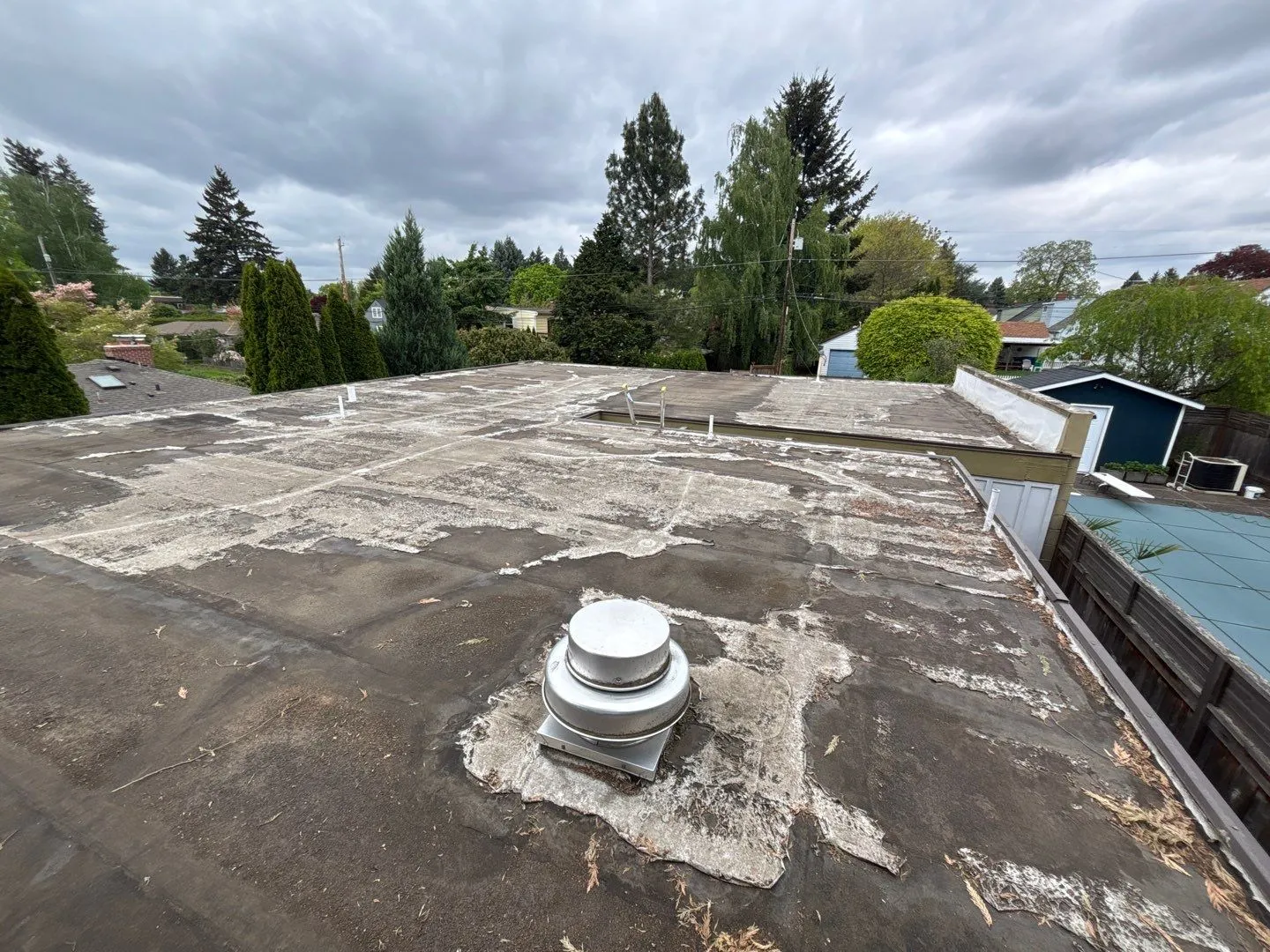
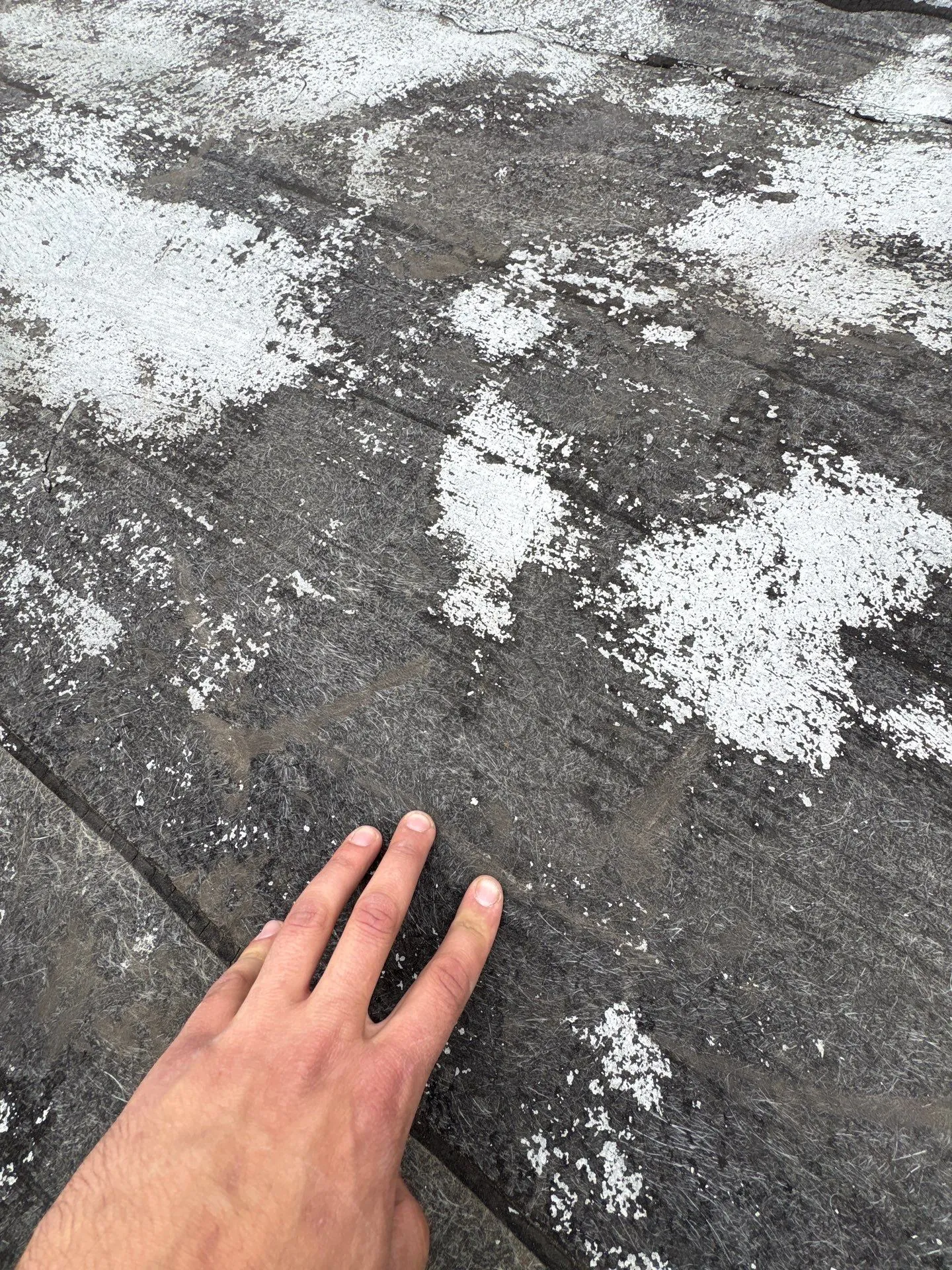
- Chalky, faded surface — the top coating has worn away in white or grey blotches.
- Exposed fiber mat — the woven reinforcement underneath shows through where the top layer is gone.
- Hard and stiff, not pliable — it doesn’t give when you press it, and edges crack rather than bend.
- 10-plus years old — especially if it’s had full, unshaded sun exposure.
If that’s what you’re looking at, it’s a silicone-repair candidate, not a weld.
When silicone won’t be enough
Silicone repairs a brittle membrane. What it can’t fix is a failed structure underneath — a rotted deck, sagging joists, or insulation saturated across large areas. Once the problem is below the membrane, no surface repair will hold, and replacement becomes the right call.
That’s its own question, with its own answer: when a flat roof actually needs replacing instead of repairing.