
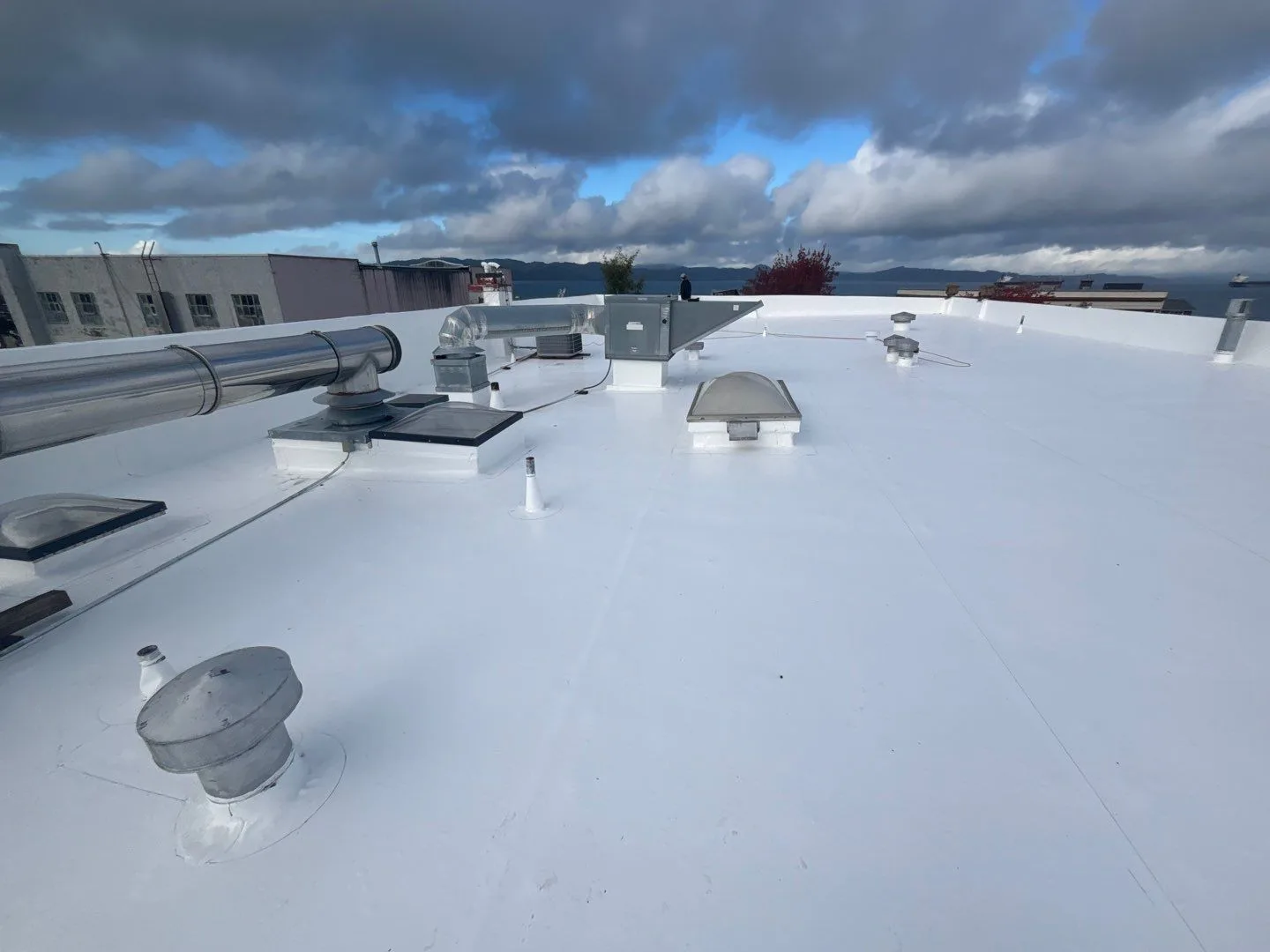
The whole roof, rebuilt as one system and ready for the next 25 to 30 years of Pacific Northwest weather.
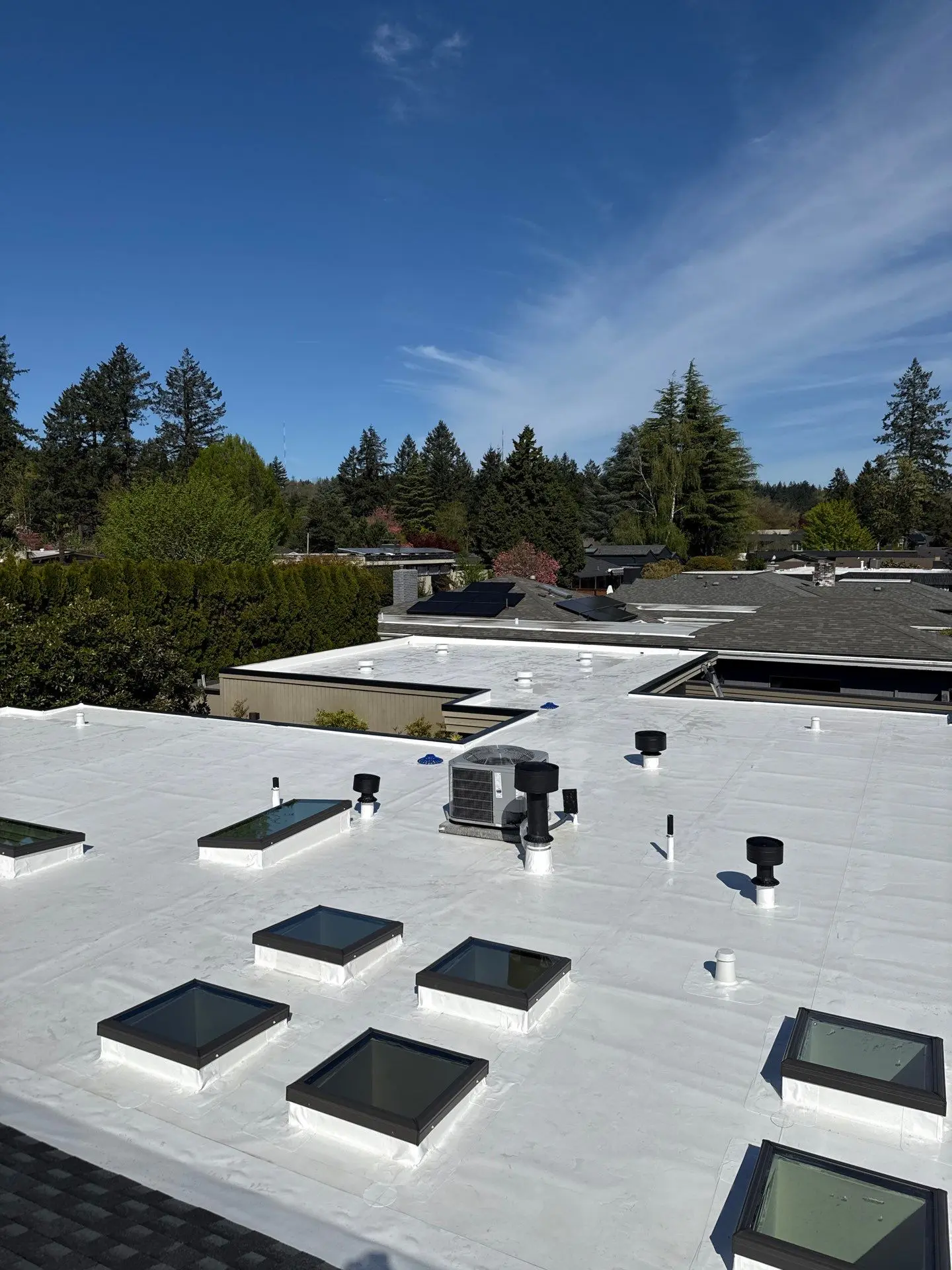
Full reroof
Start with a free inspection.
Book inspection The whole roof, rebuilt as one system and ready for the next 25 to 30 years of Pacific Northwest weather.
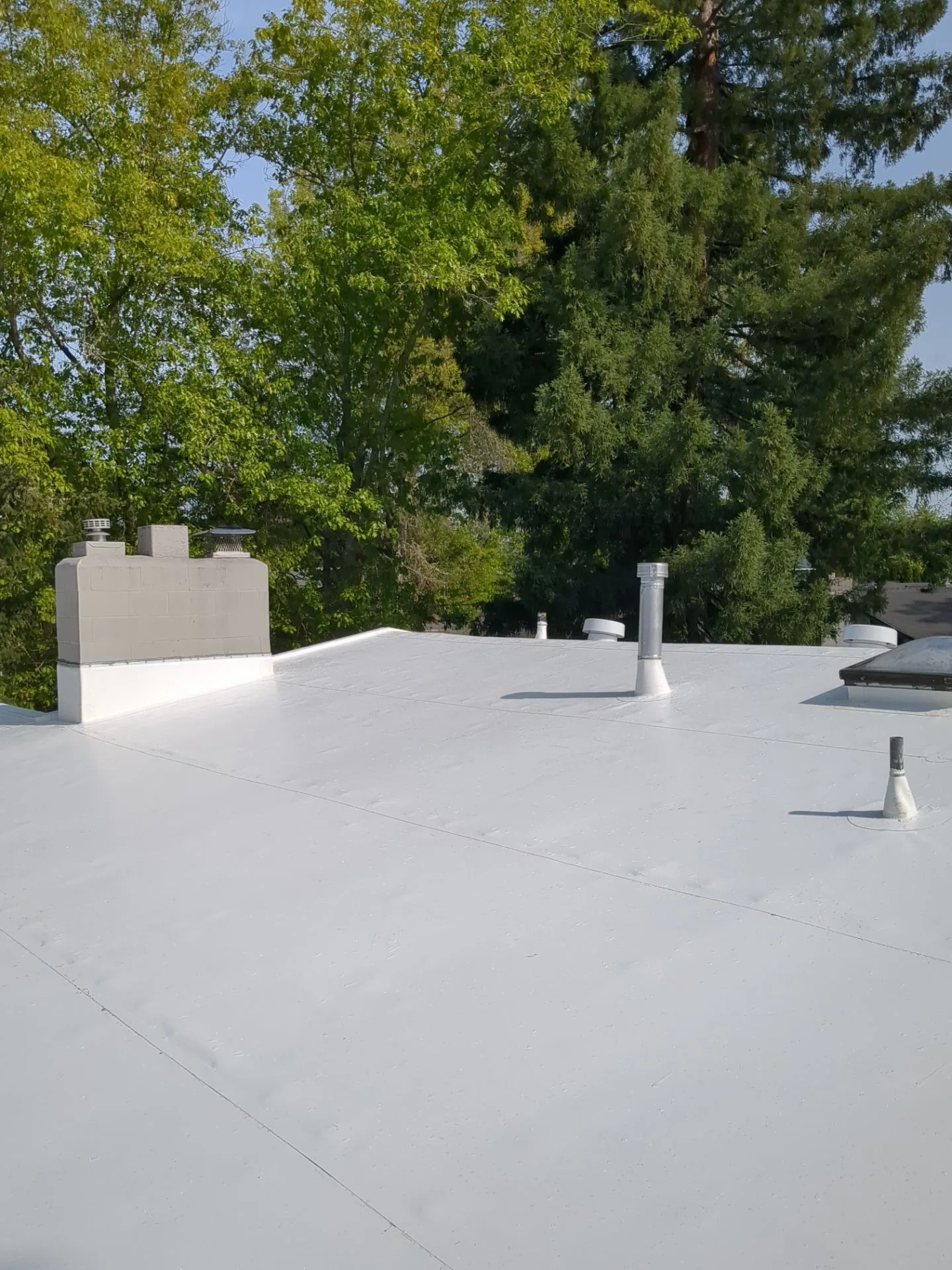
Bright white membrane across the entire roof. Clean, reflective, unmistakably new.
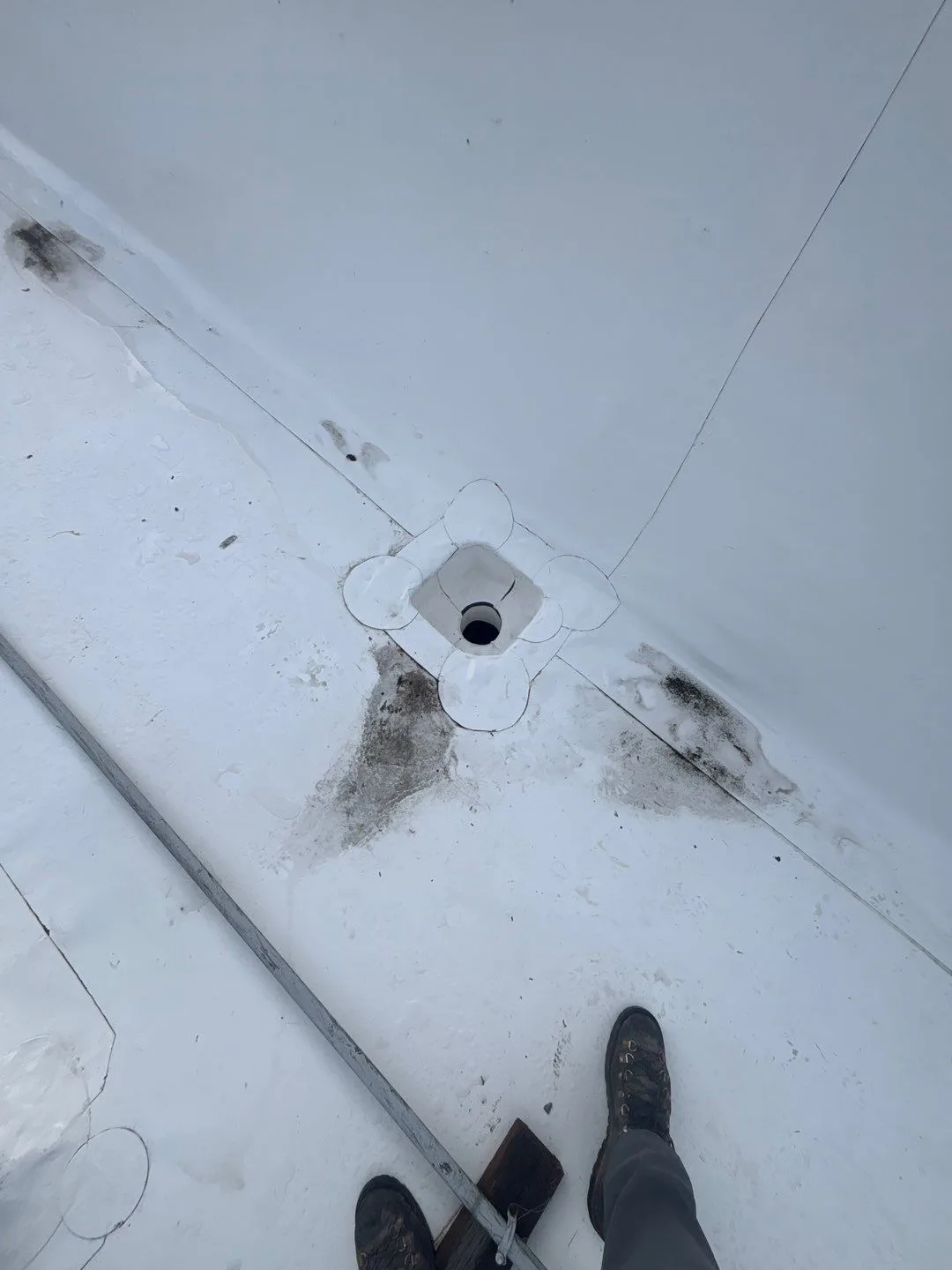
Low spots are corrected and water is given a clean path off the new membrane.
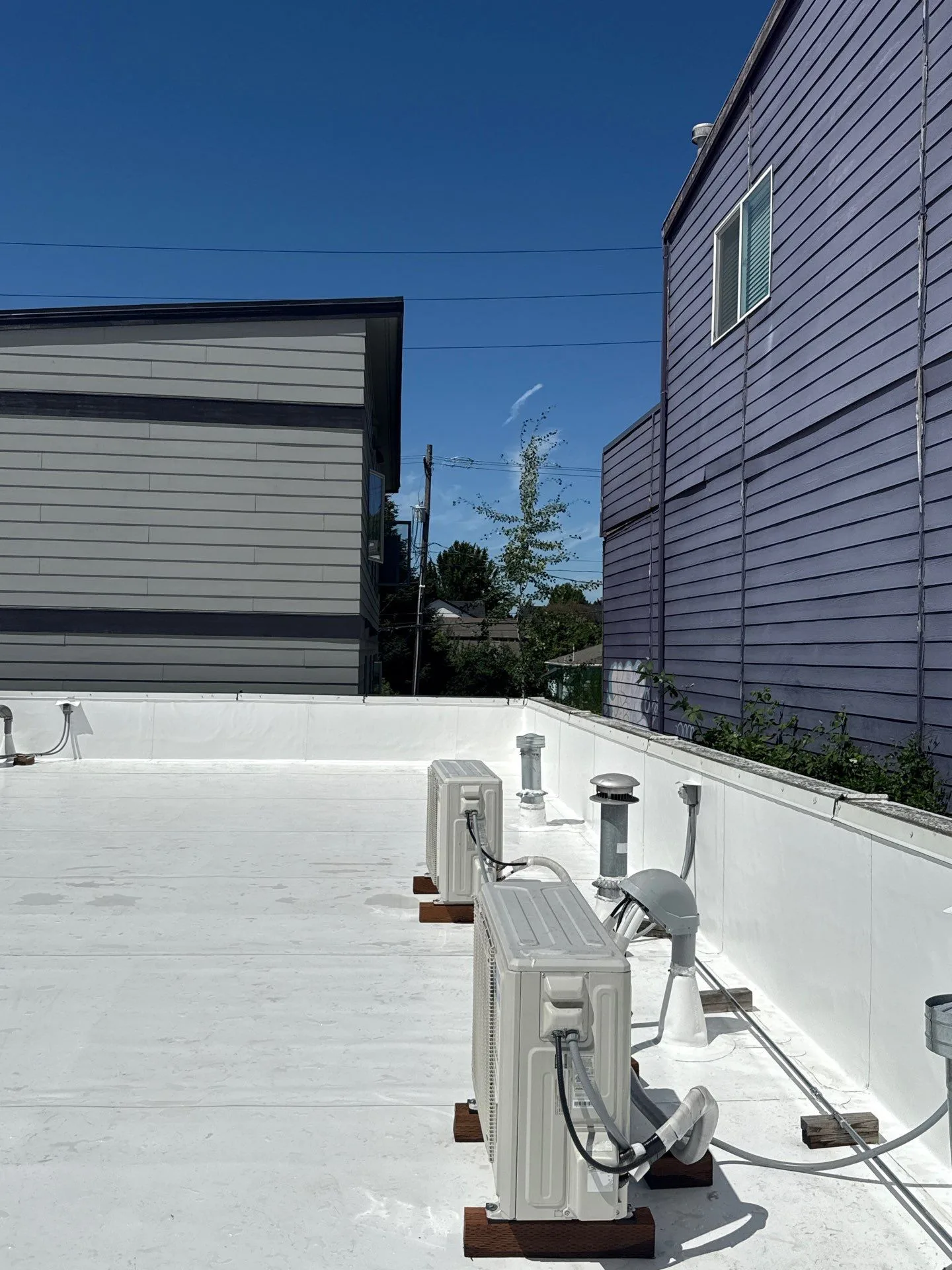
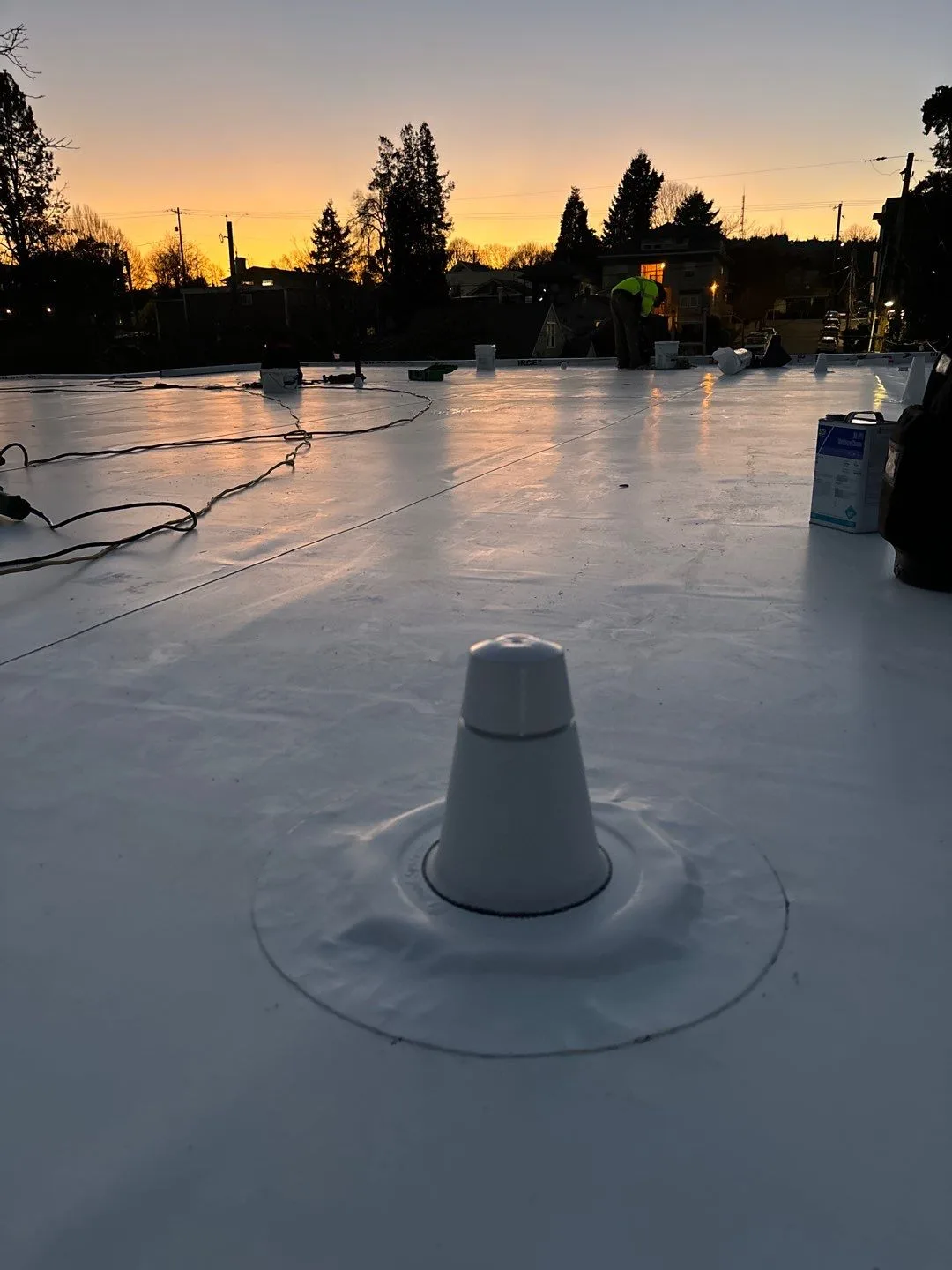
Vents, skylights, and rooftop units are sealed in cleanly, with every detail taken care of.
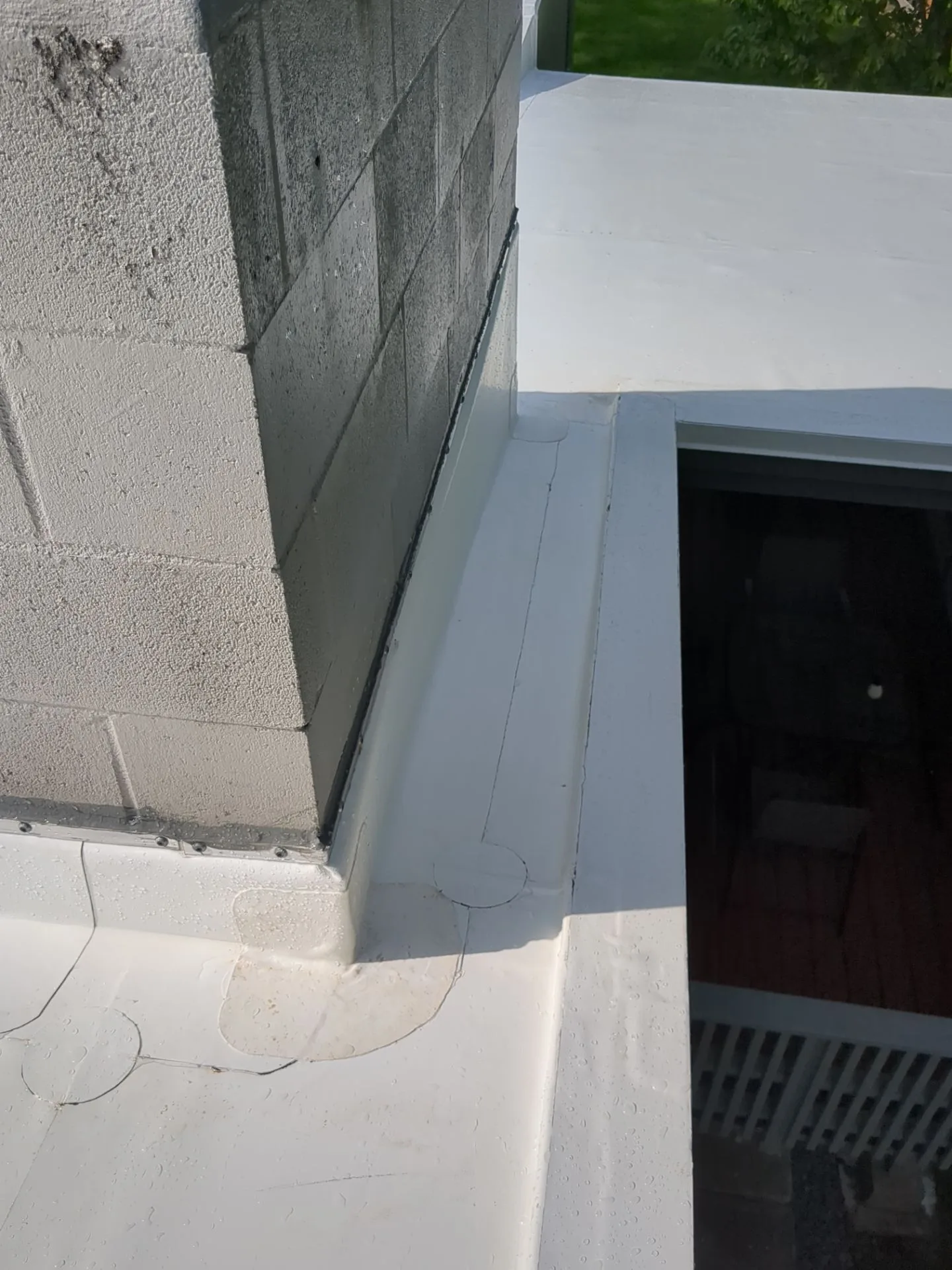
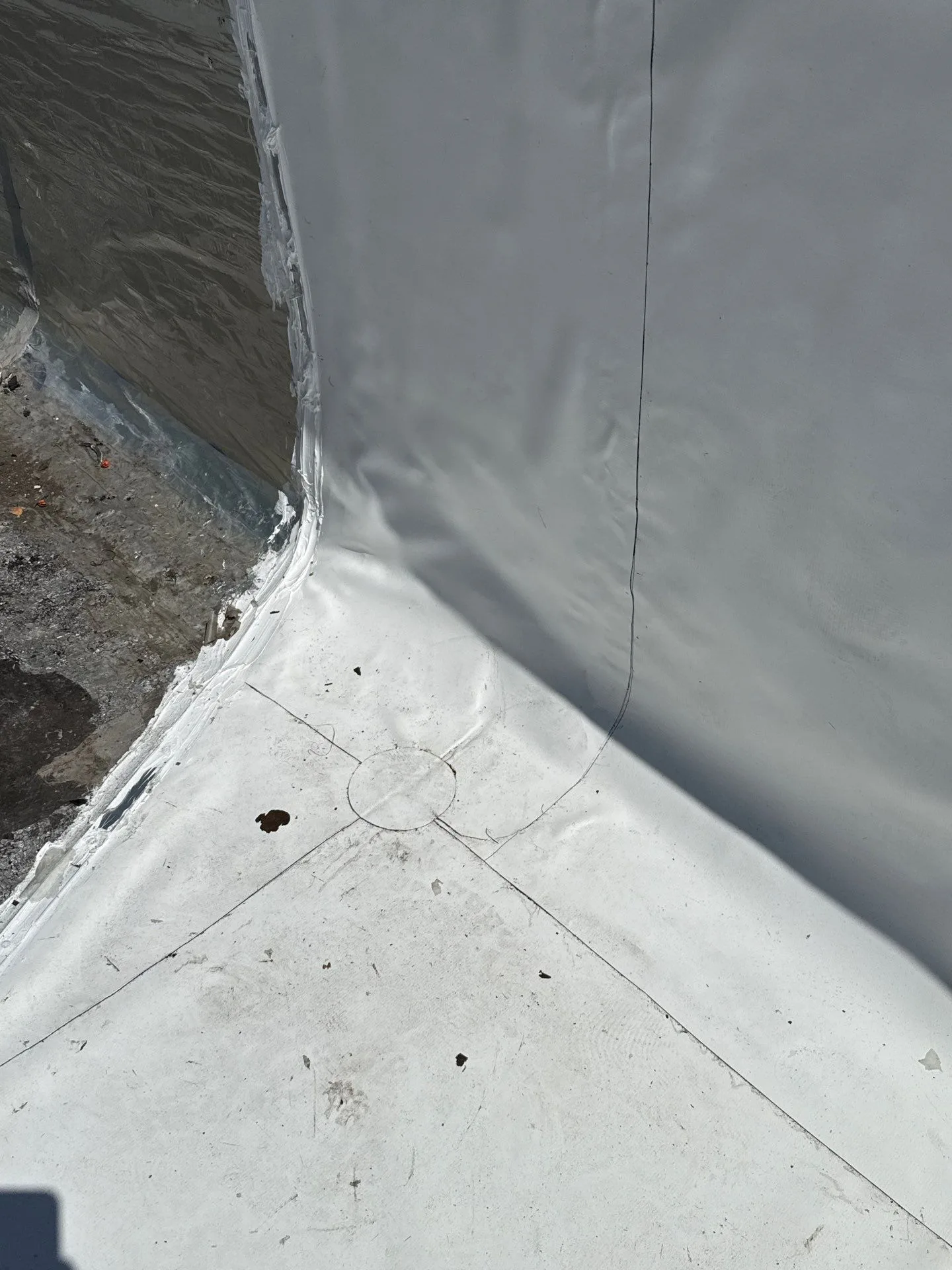
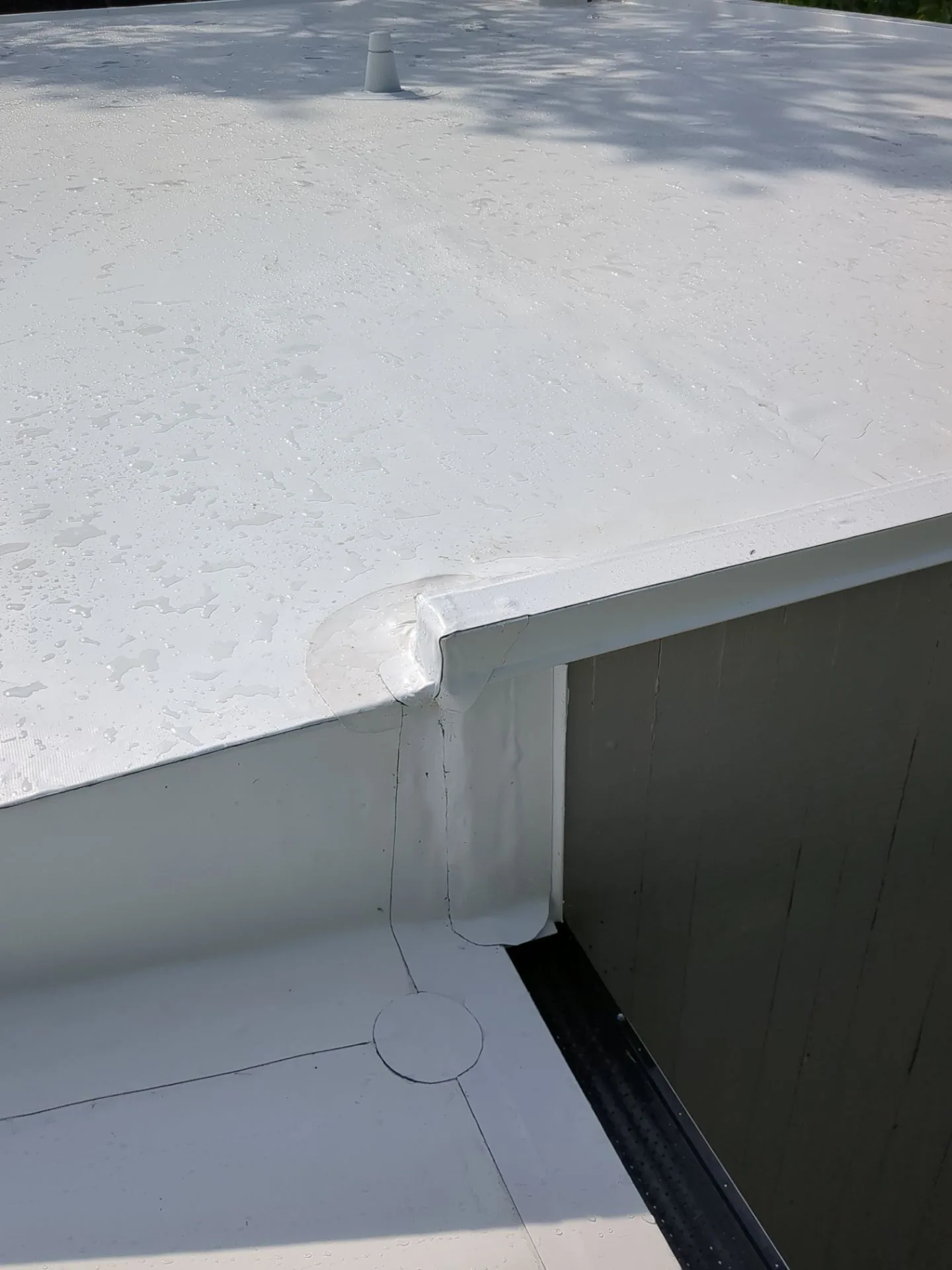
Every custom detail is installed to spec, from wall tie-ins to inside corners. Made for this exact roof.
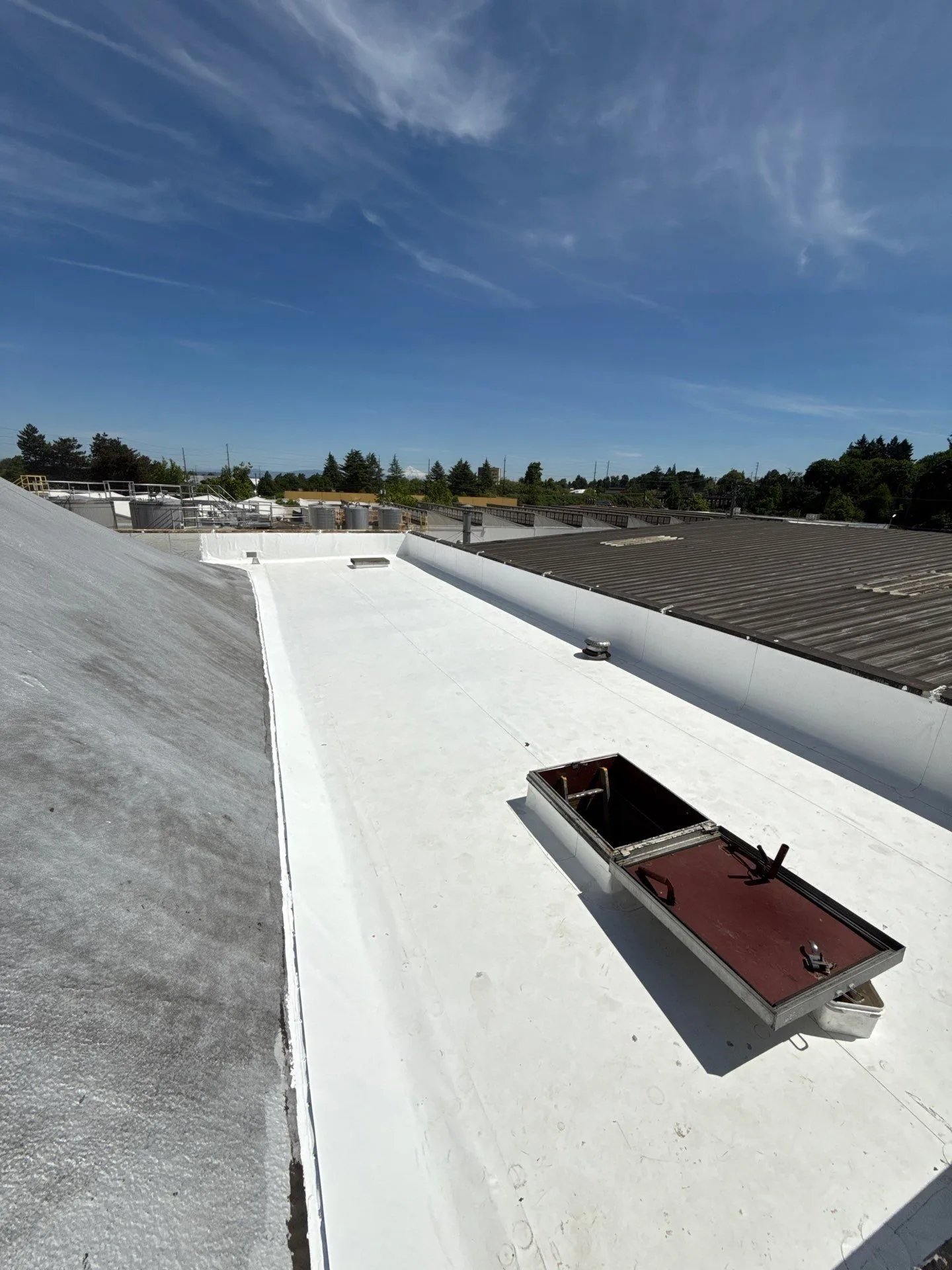
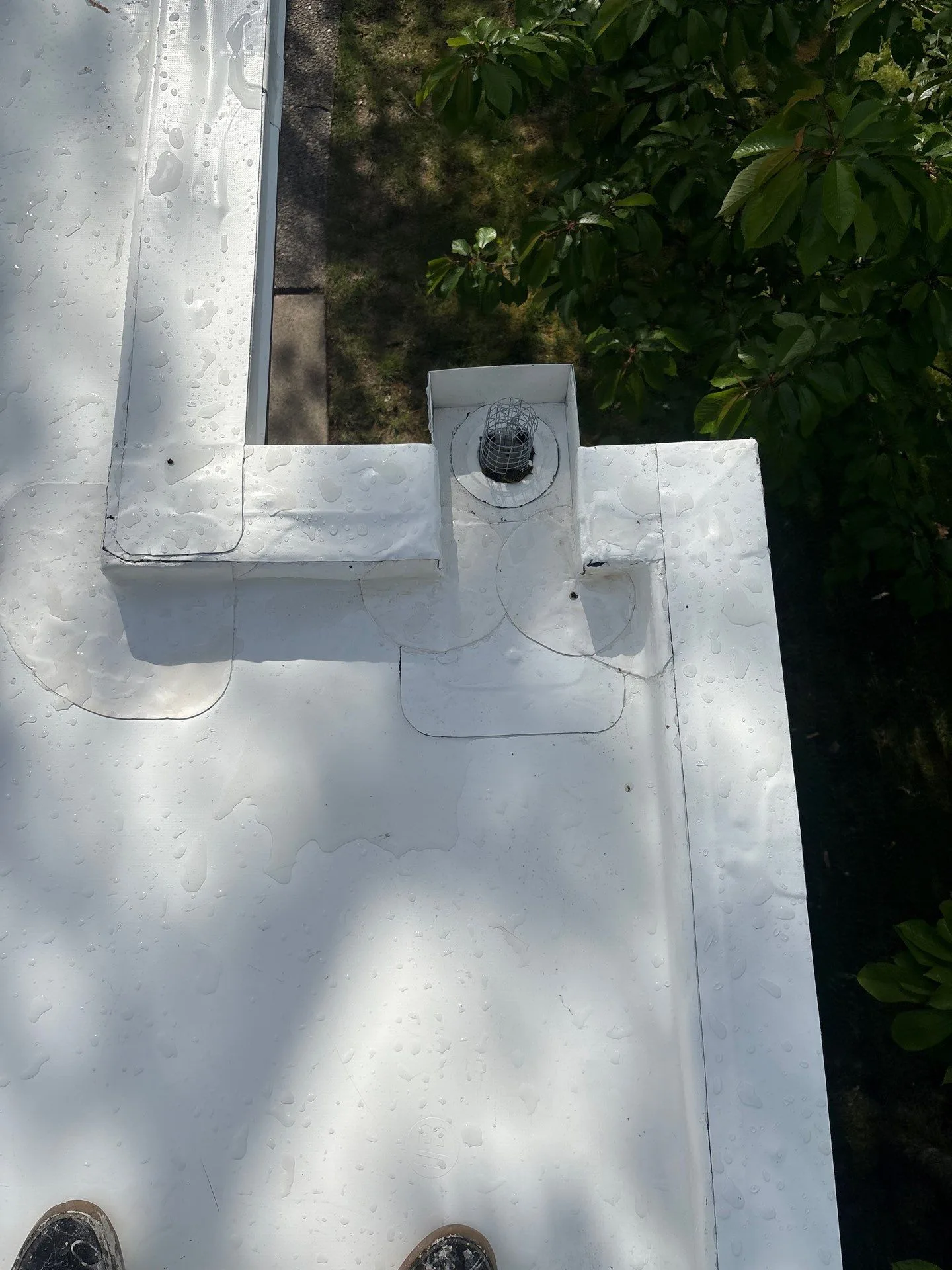
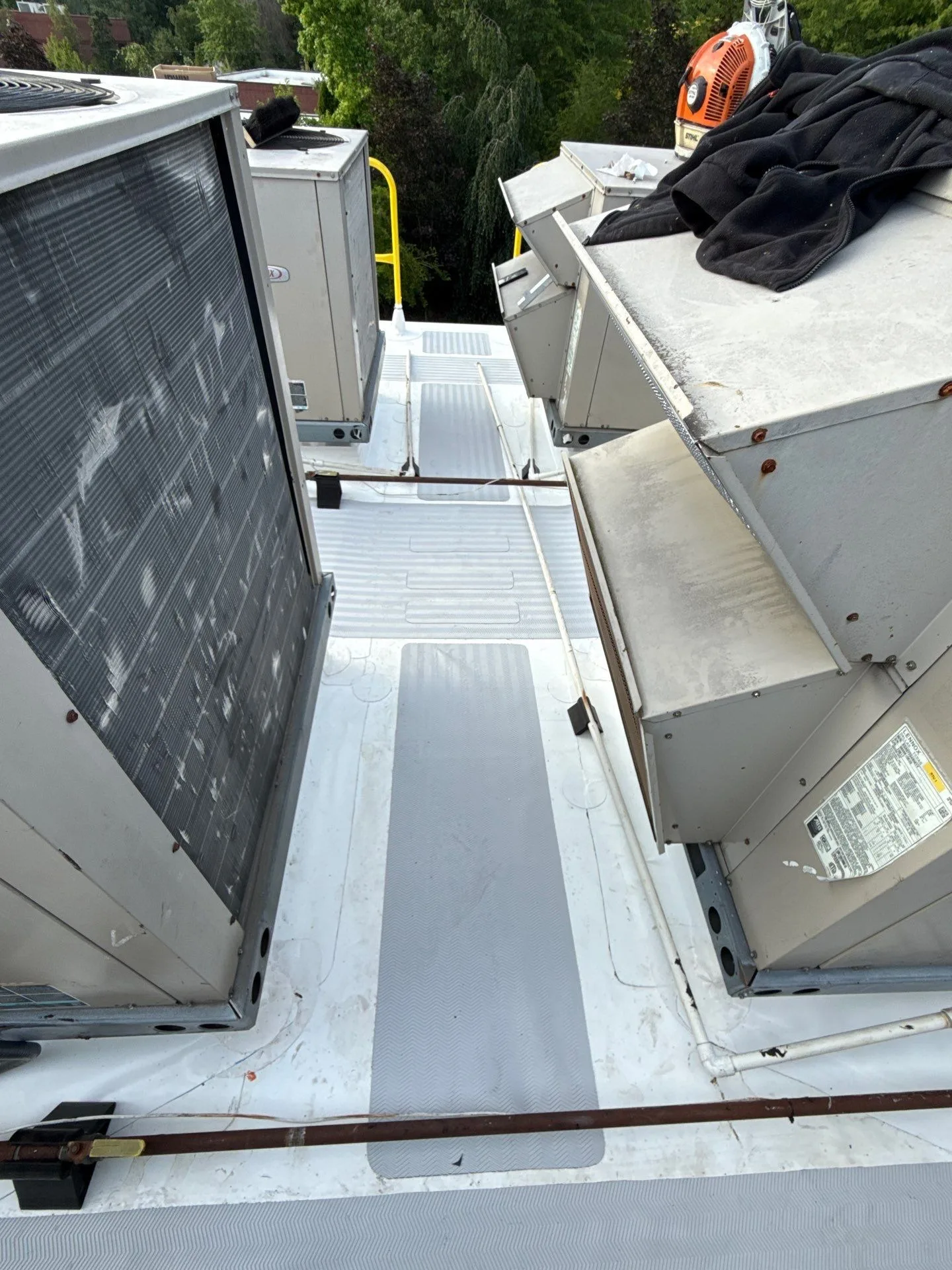
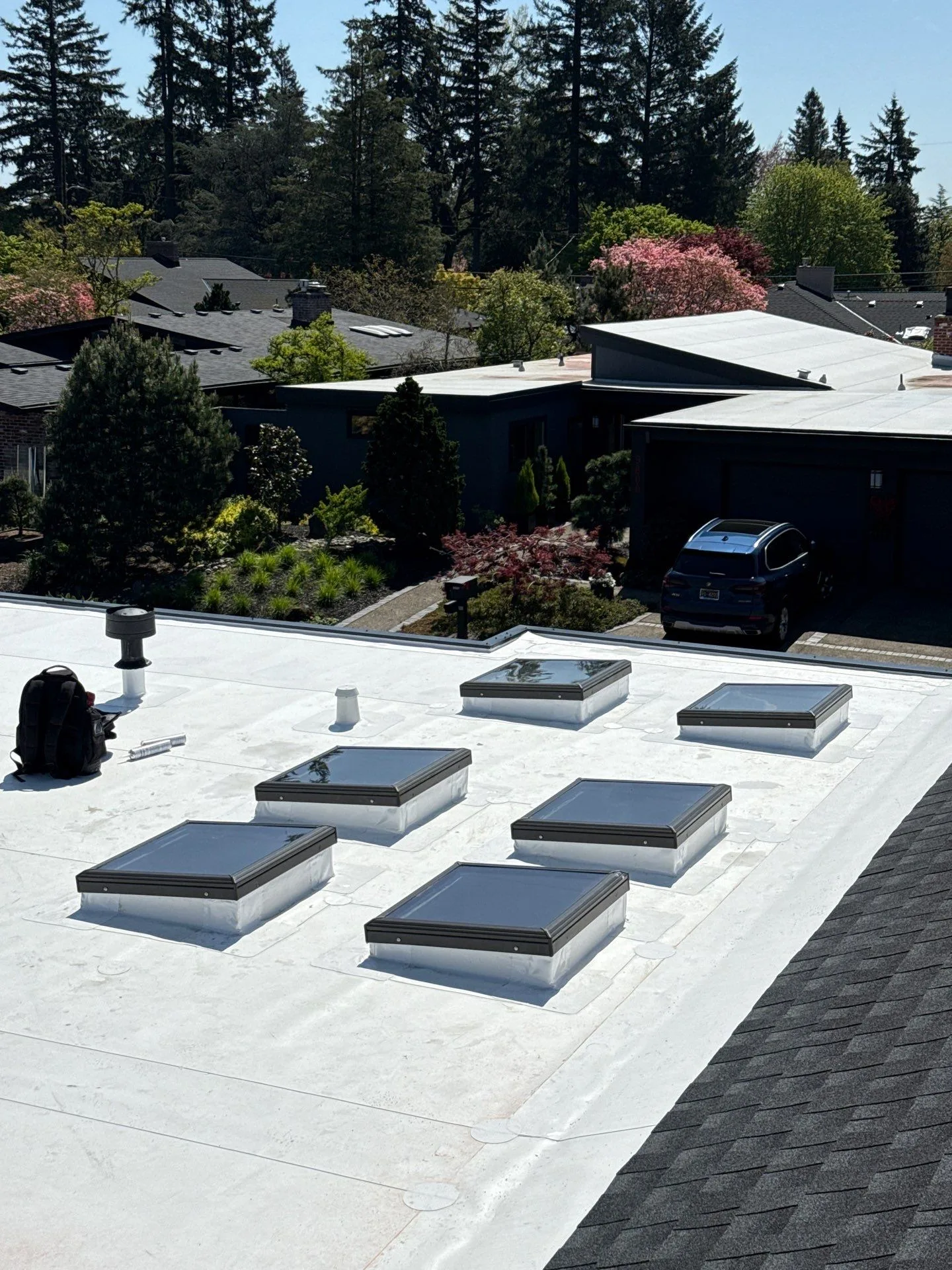
Water has a way off. Air has a way out. Every working part is set up to keep the roof moving, breathing, and protecting the building beneath it.
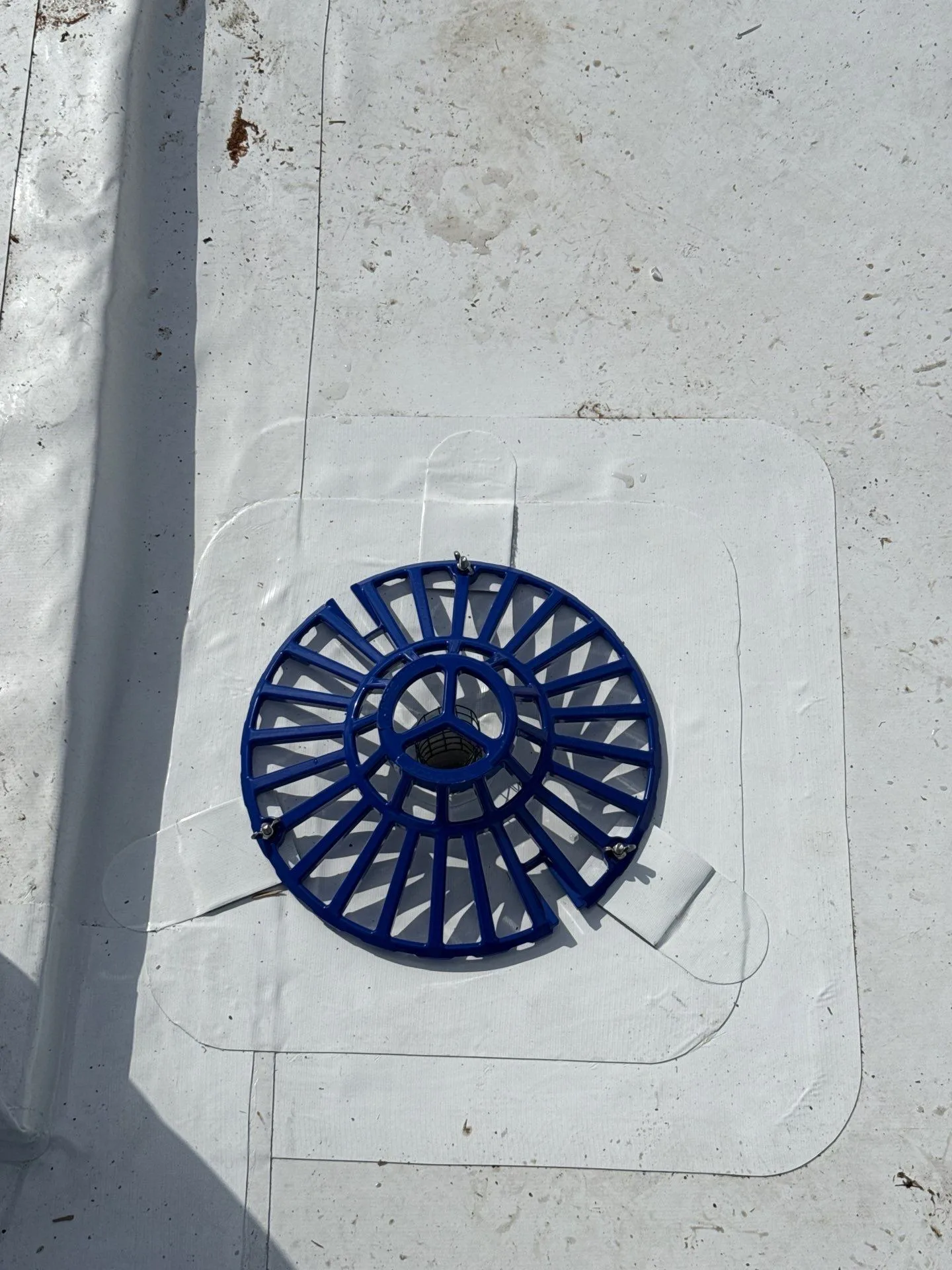
Everyday rainwater filters through the strainer and enters the roof drainage system.
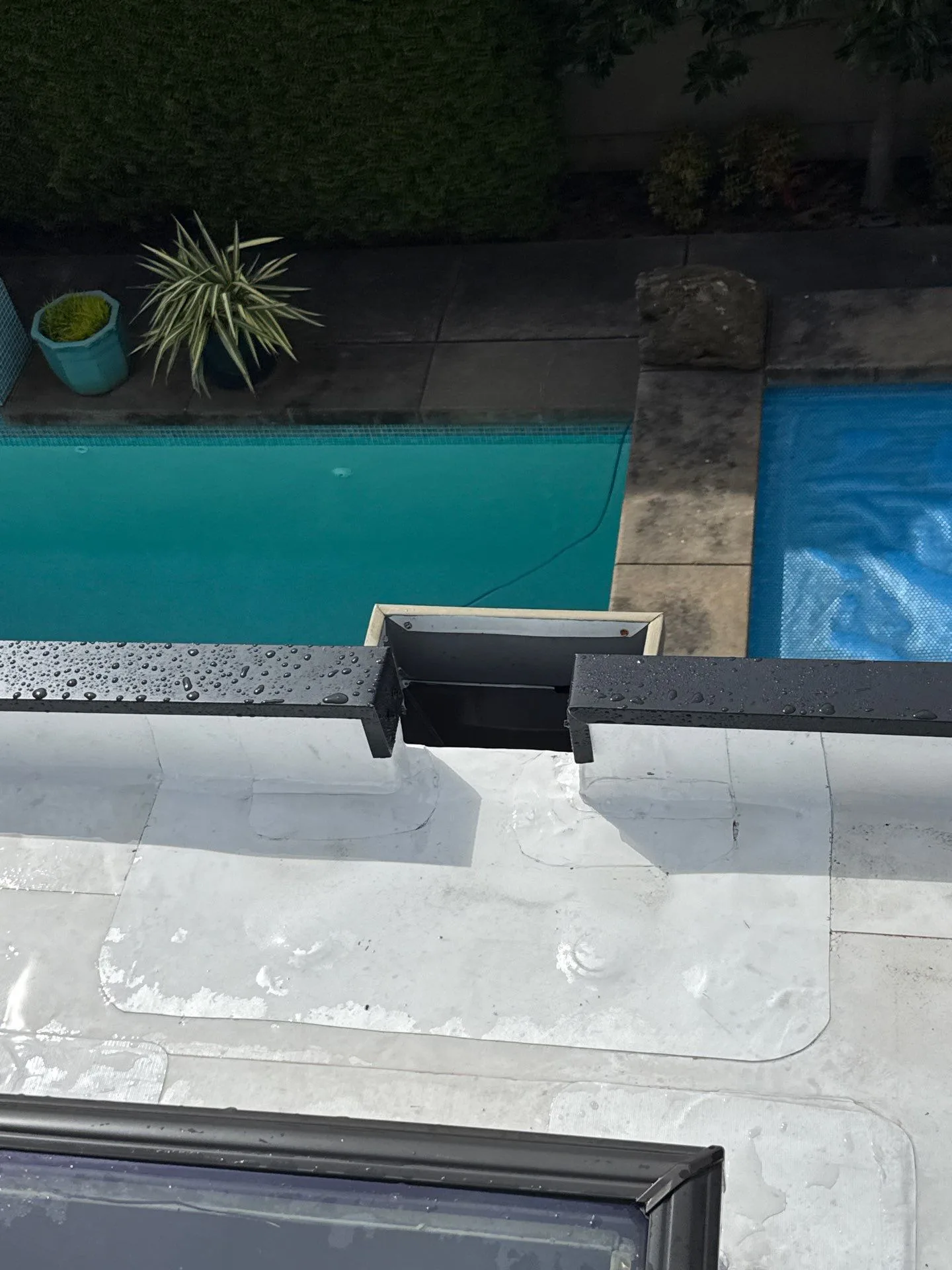
Rising water reaches the overflow and runs out through the wall.
As heat builds inside the roof, air moves upward and escapes through the vent.
Water moves with the pitch of the roof, carrying it toward the drain before it can pool.
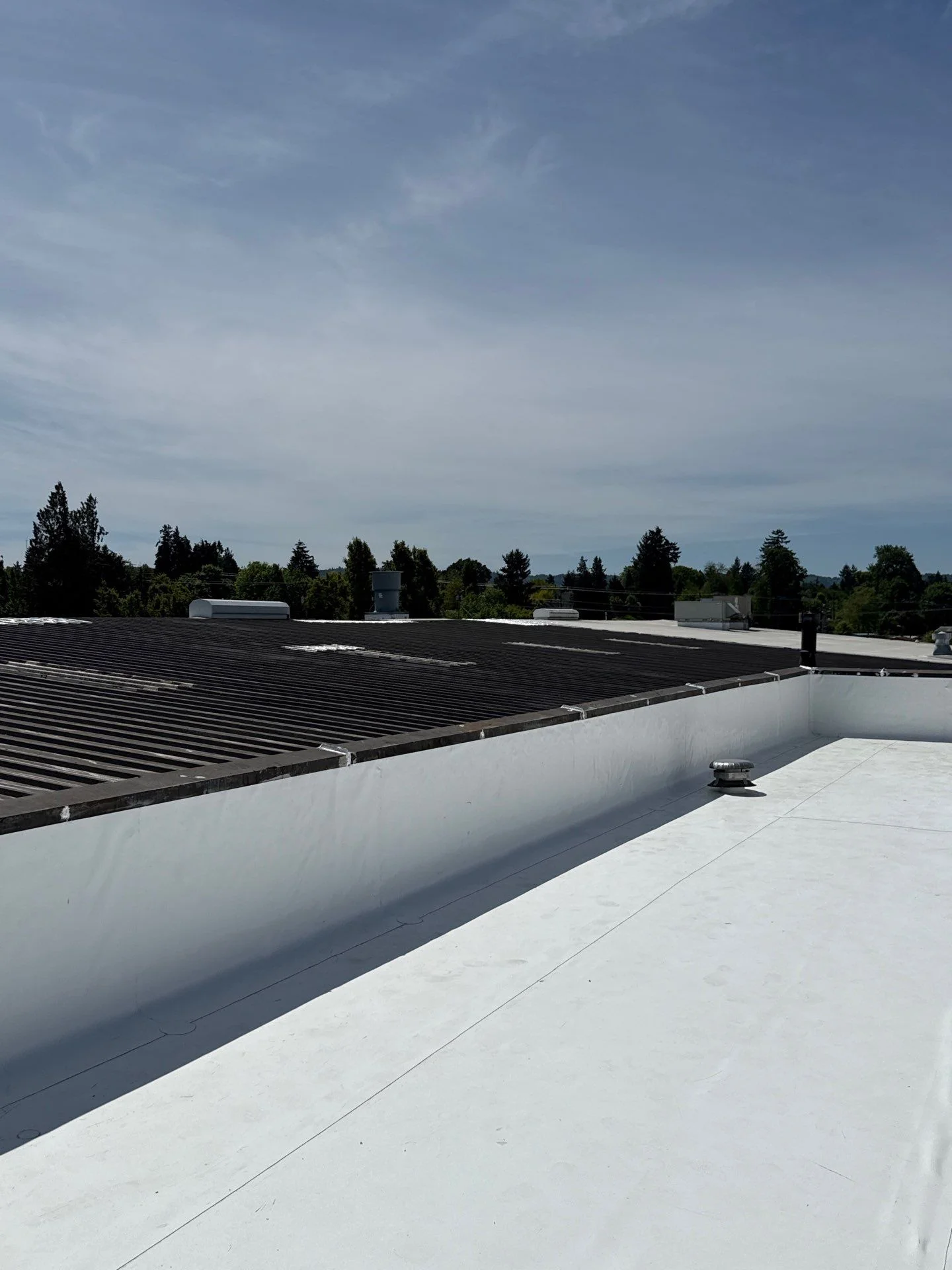
The new roof is built around a white, heat-welded membrane system: sealed at the seams, reflective in direct sun, and engineered to stay serviceable as it ages. It is the working surface of the roof, so the details matter.
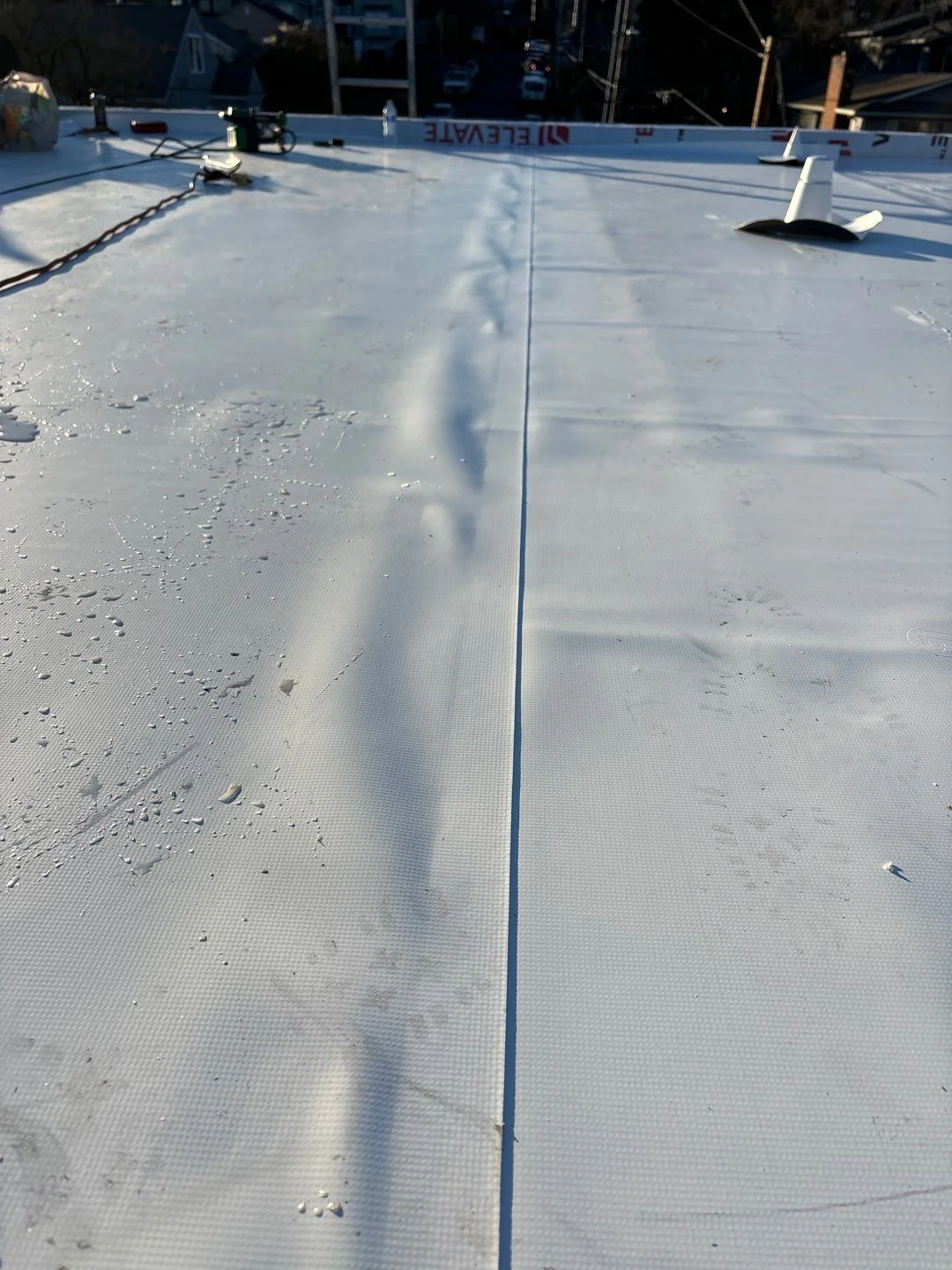
Heat-welded seams. The overlap becomes one continuous waterproof line, tested up to 360% stronger than the ASTM minimum.
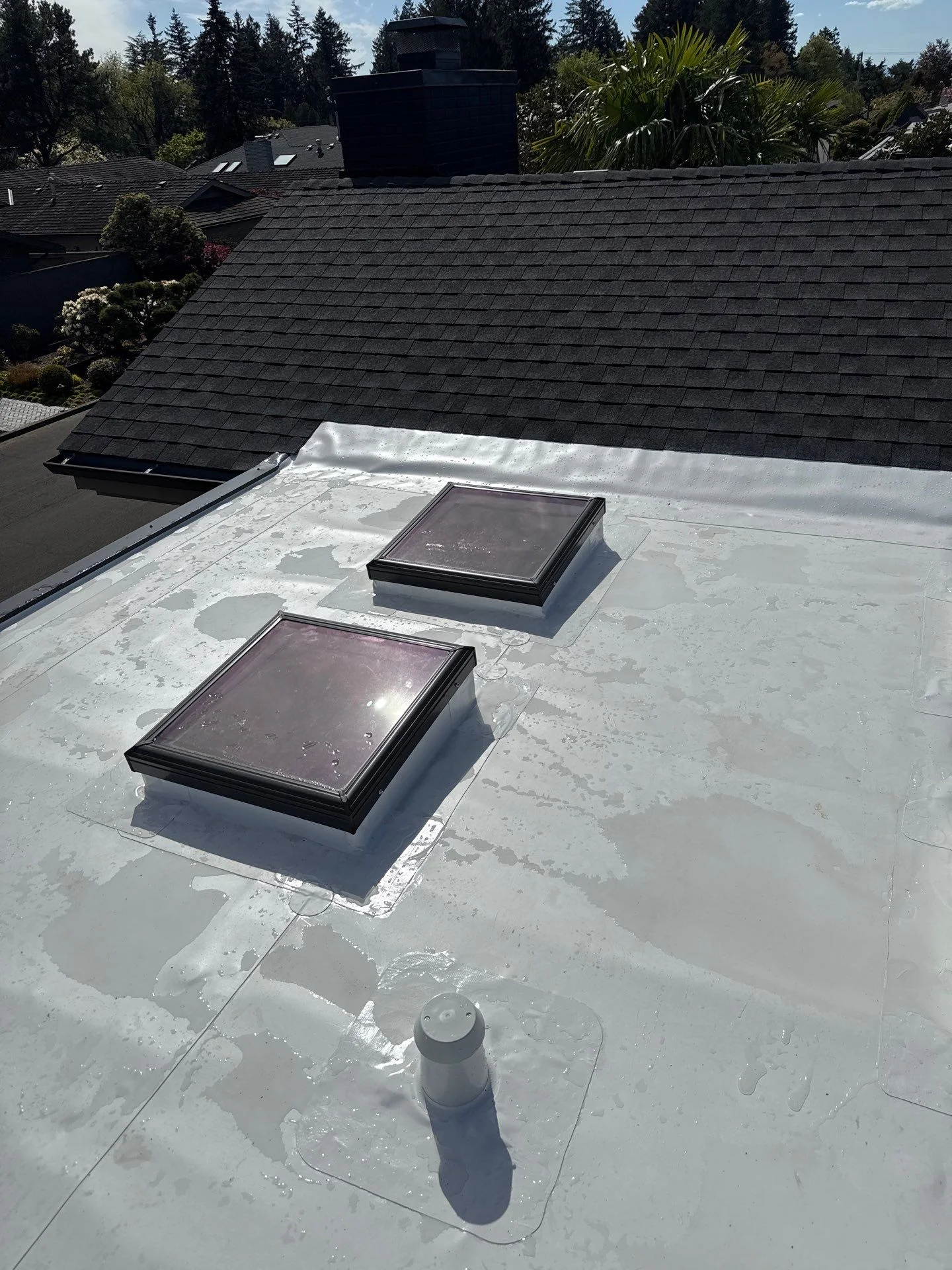
87% solar reflectance. The white surface sends more sun back off the roof, helping reduce heat gain at the roof level.
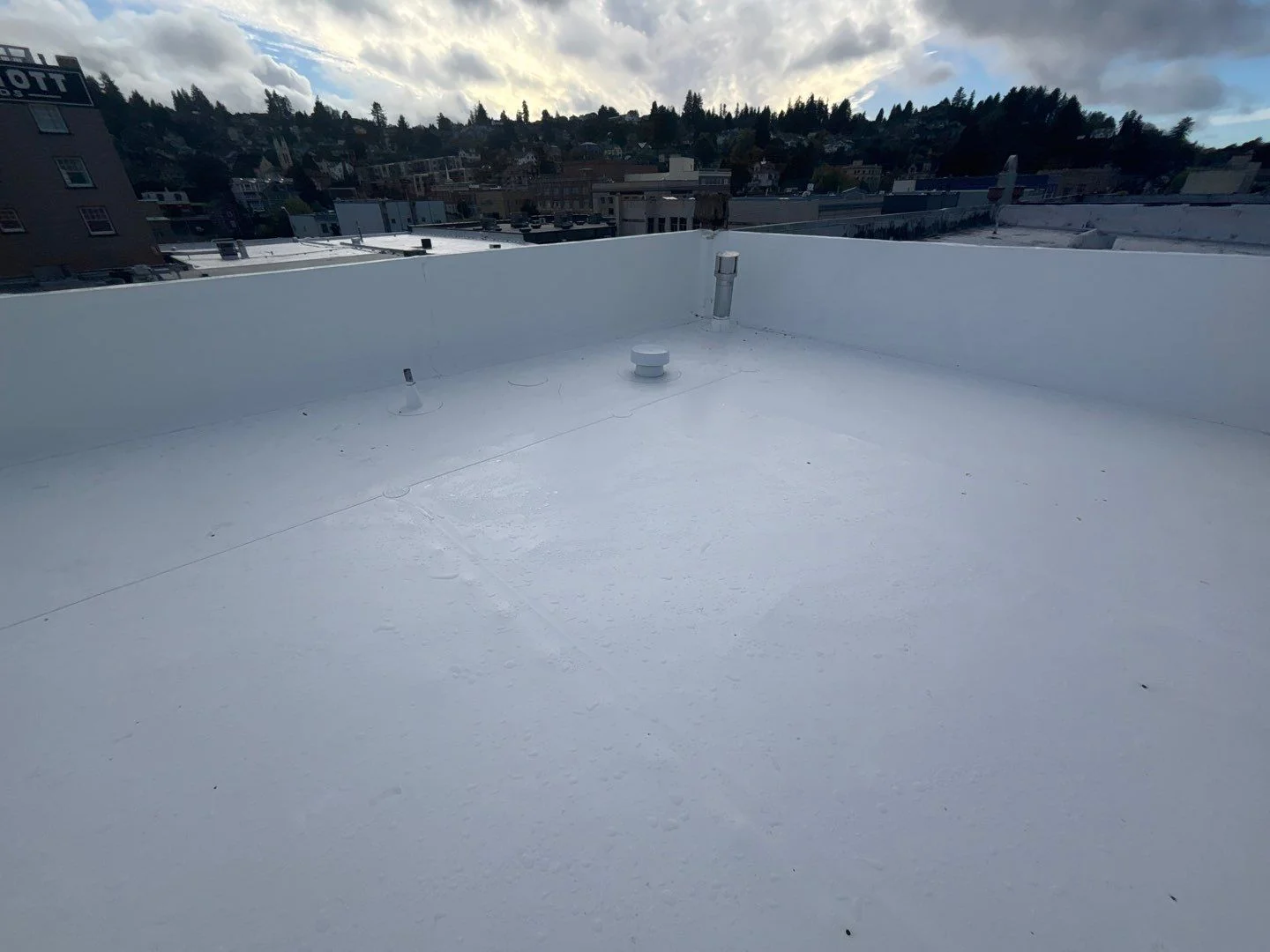
0.6% water absorption. Tested under ASTM D570, with absorption five times lower than the 3% industry allowance.
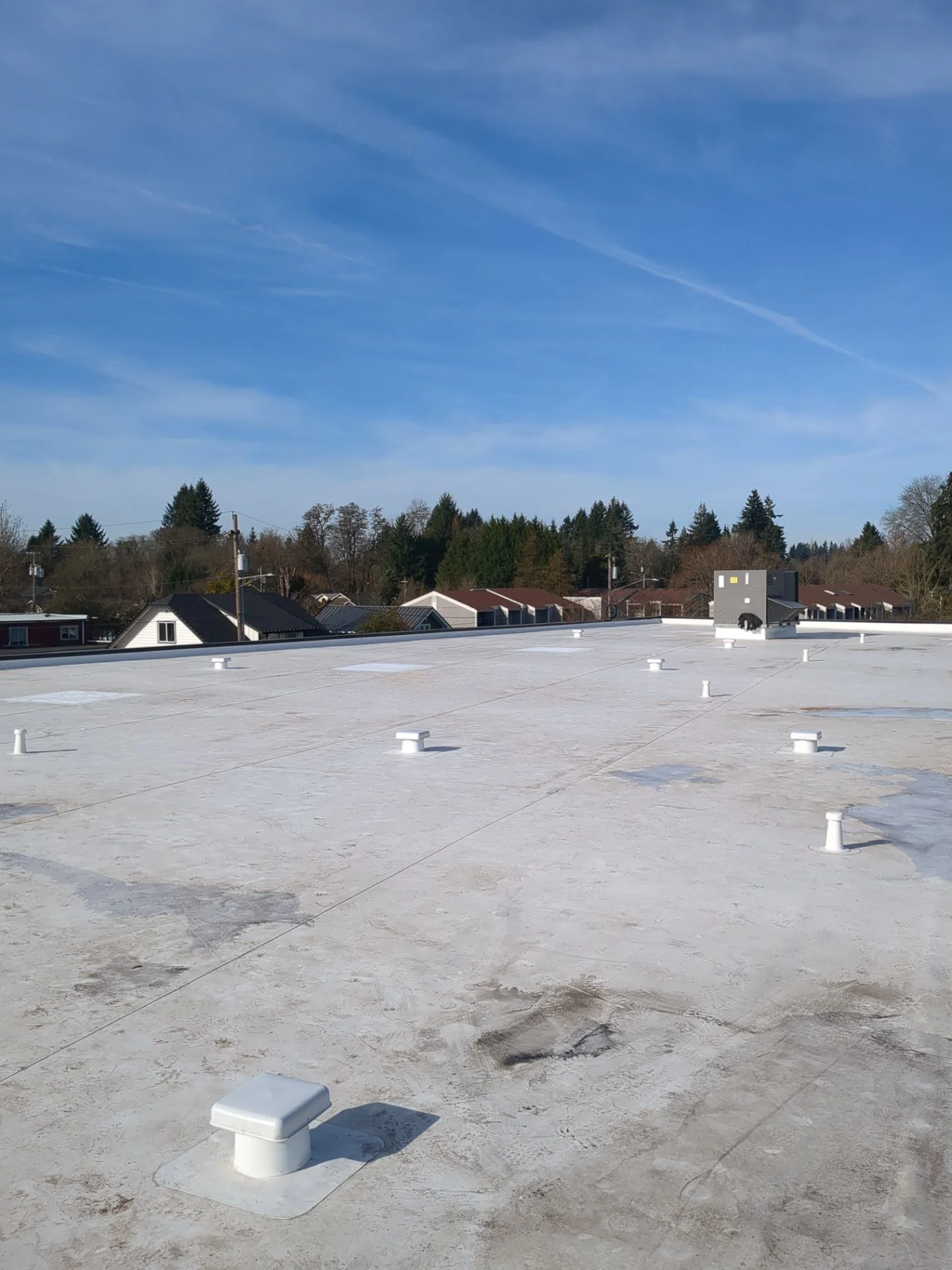
More wearing surface. The exposed layer is up to 38% thicker than the ASTM standard requires, adding material where sun, rain, and foot traffic hit first.
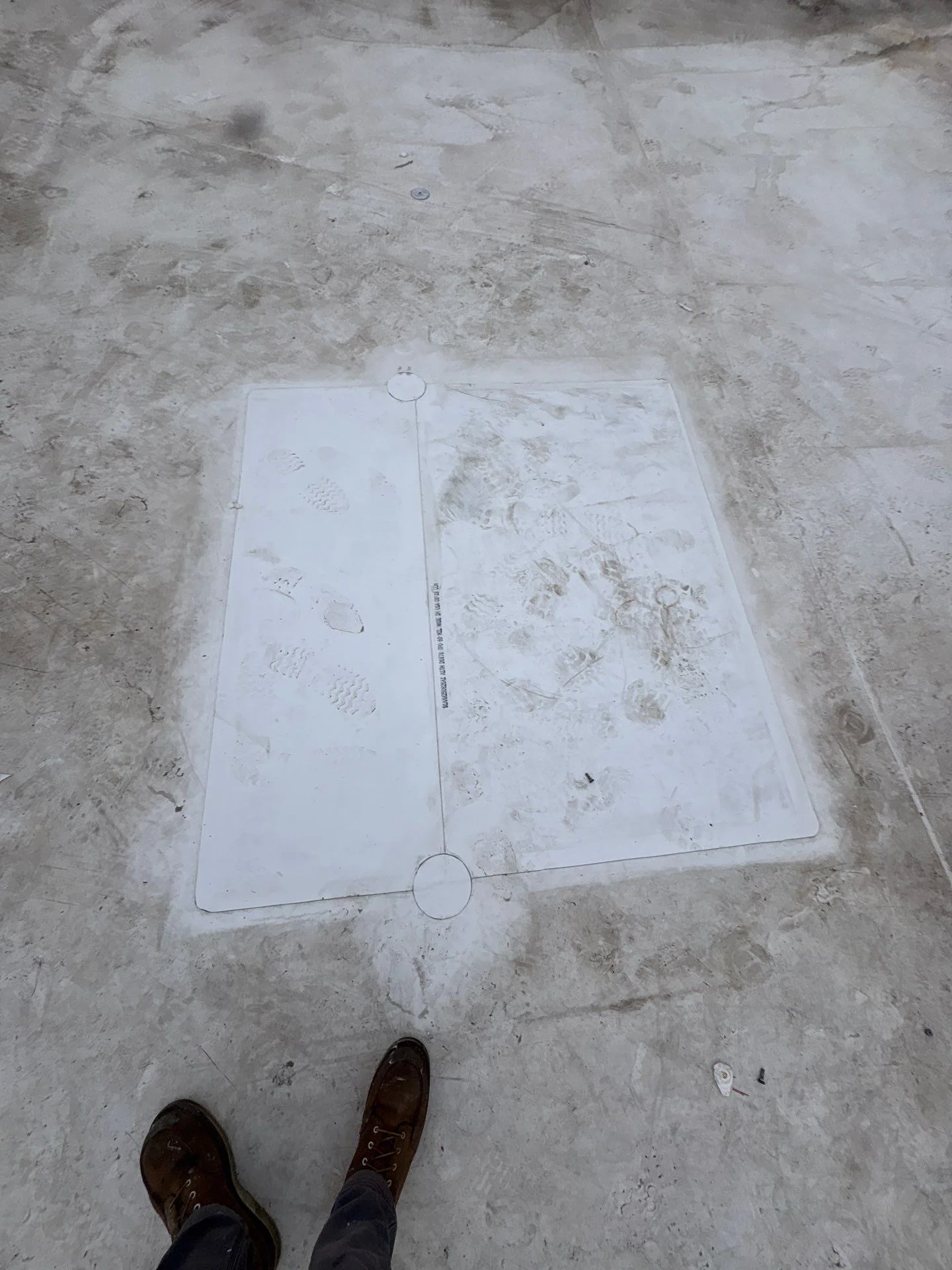
Still weldable decades later. New membrane can be fused into the roof system, so future repairs, vents, and equipment changes can tie in cleanly.
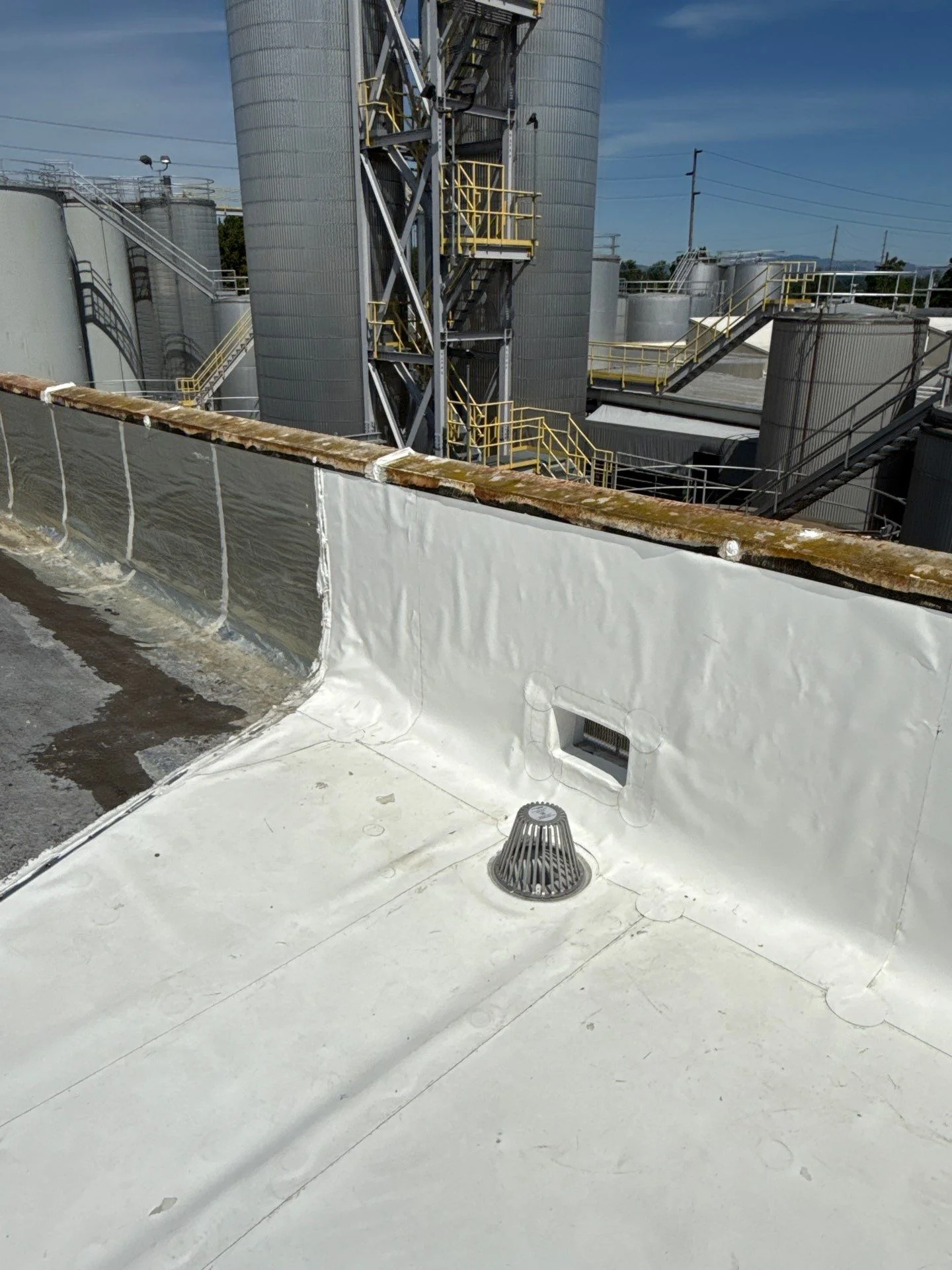
Ready for rooftop exposure. Built to resist grease, oils, jet fuel, and common rooftop chemicals around restaurants, equipment zones, and industrial roofs.
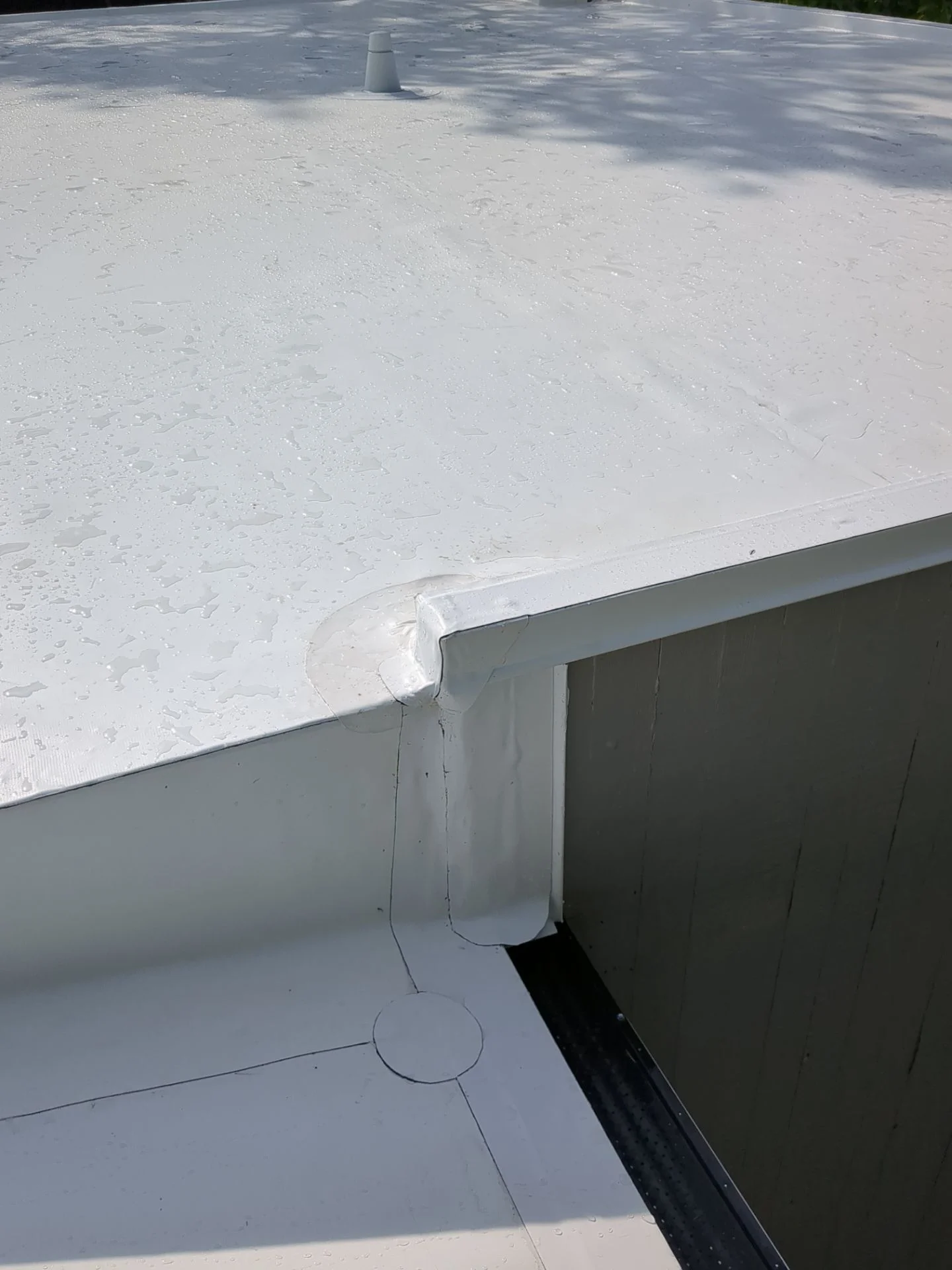
The weld does the sealing. Each lap is fused into the membrane surface, keeping the waterproofing in the sheet itself.
Roof work should not become a mystery once the crew leaves. A full reroof stays connected from first inspection to installation to finished surface, with the final documentation behind it.
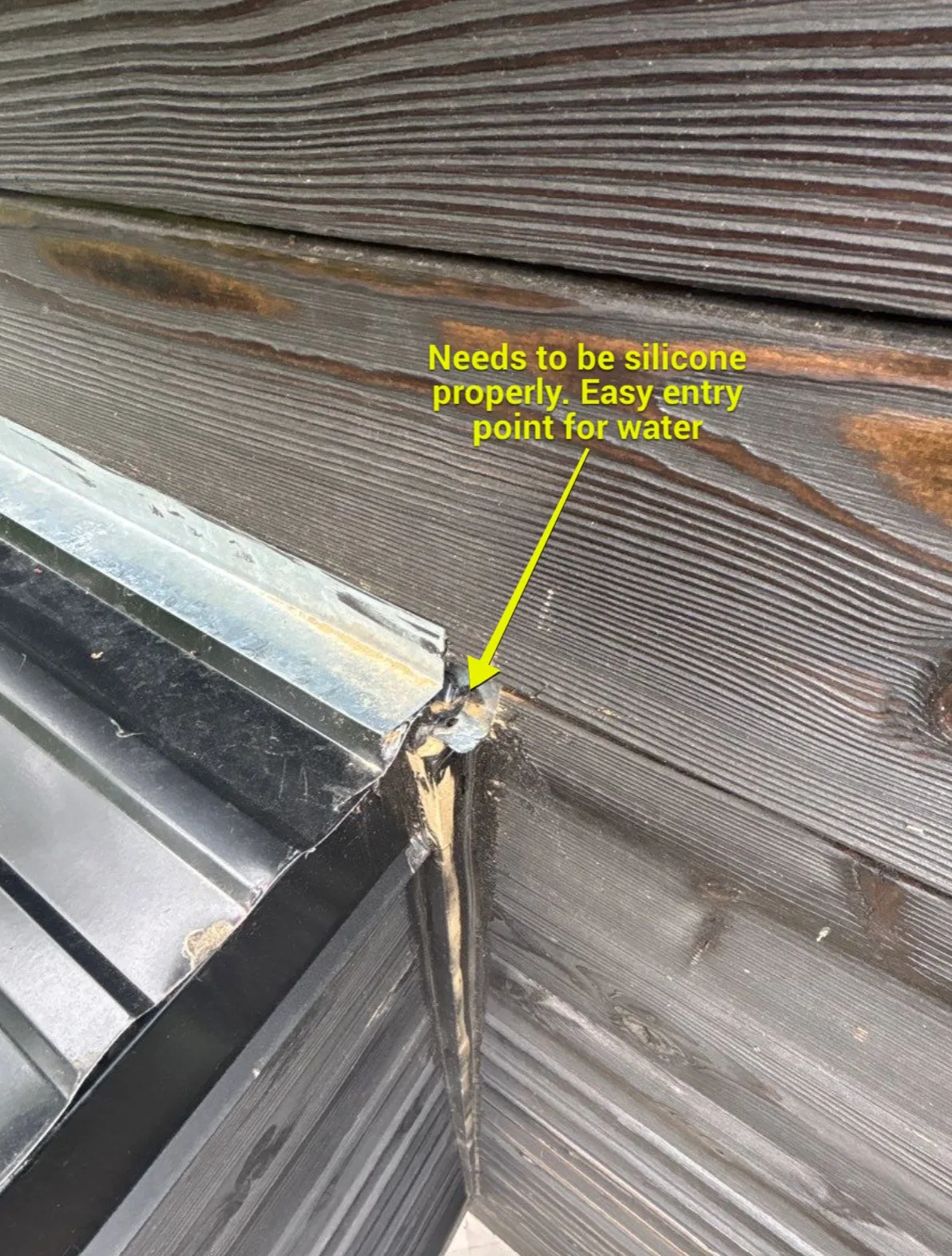
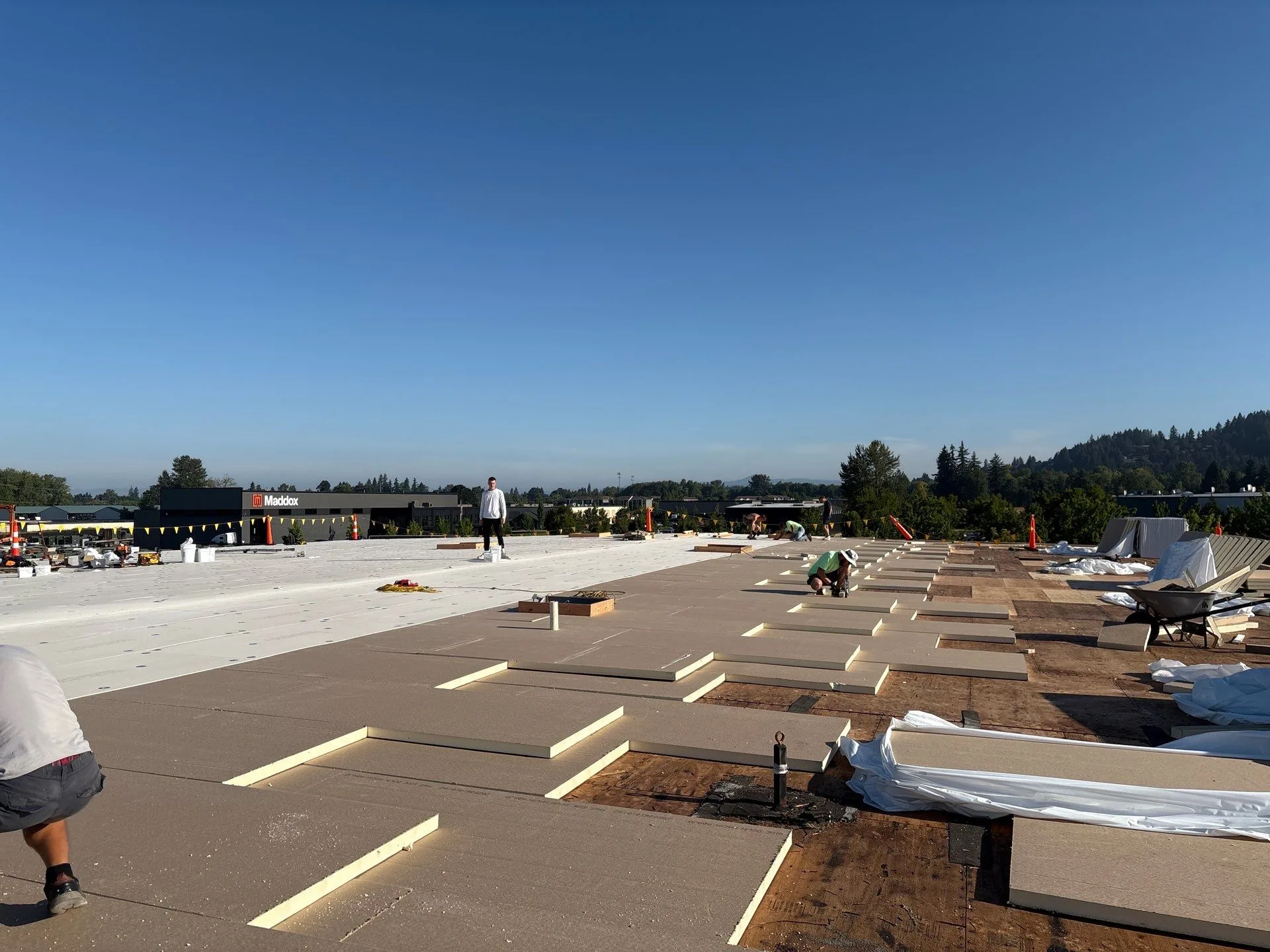
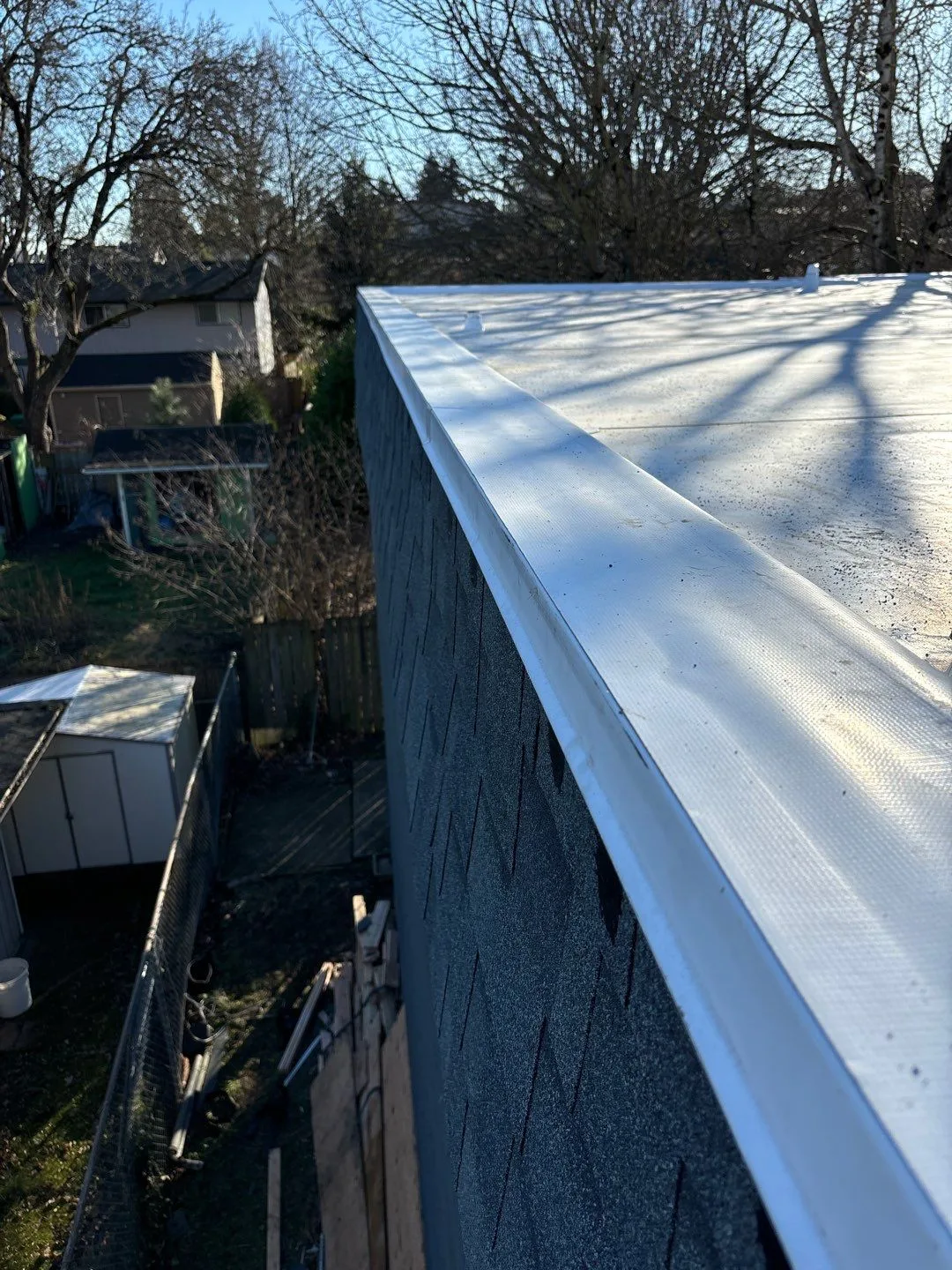
The record starts before work begins: what was found, where water can get in, and why the roof needs a larger scope. The starting point stays visible.
As the old system comes off and the new one goes down, the key steps are photographed too: deck condition, insulation, seams, tie-ins, and details. The work has a trail.
When the reroof is closed out, the finished membrane is recorded with the documents behind it. You can see what was done, not just hear that it is done.
A 20-year warranty starts with the install. Every required detail is completed to spec, so your coverage begins with a roof built exactly the way it was meant to be.
One complete system, ready for decades of Pacific Northwest rain, sun, and wind.
Photos, measurements, line items, and updates keep the work visible from the first inspection.
Drains, walls, vents, edges, and seams all get the same care.
If a repair will hold, we say so. Reroofing is for roofs past patching.
A reflective, heat-welded membrane is made for sun, rain, and future service.
Old roofing is hauled away, the site is swept, and fasteners are checked.
The inspection decides that from the roof itself. If a repair will hold, you’ll see that option; a reroof is recommended when the membrane, deck, or failure pattern has gone too far for another repair to make sense.
The membrane is specified for the roof, not chosen from a one-size-fits-all menu. After the inspection, your specialist can show you the recommended assembly, why it fits the building, and how it will be installed.
Most reroofs take one to three weeks. The crew opens only what can be closed that day, and weather windows are built into the schedule so the building stays dry.
Rot is handled as a documented change, not a surprise add-on. Your specialist shows photos, explains the affected area, and gets approval before that section is rebuilt.
The building can usually stay in use. Work happens overhead, with access, noise, and staging coordinated ahead of time so tenants, staff, and customers know what each day brings.
The roof system carries a 20-year manufacturer warranty when installed to spec. Flat Roof LLC also backs the workmanship for one year, so both the material system and the installation are covered.
The price is built after inspection, measurement, deck condition, and system details are known. You get it in writing by line item, and financing can be reviewed when a reroof is the right recommendation.
The old system is torn off, loaded into a dumpster on site, and hauled away. The crew sweeps, walks the site, and runs magnets for loose fasteners before the job is closed.
A few weeks, in most cases. Materials are ordered for your roof, the crew is scheduled around the right weather window, and your specialist confirms the start date once both are in place.


