
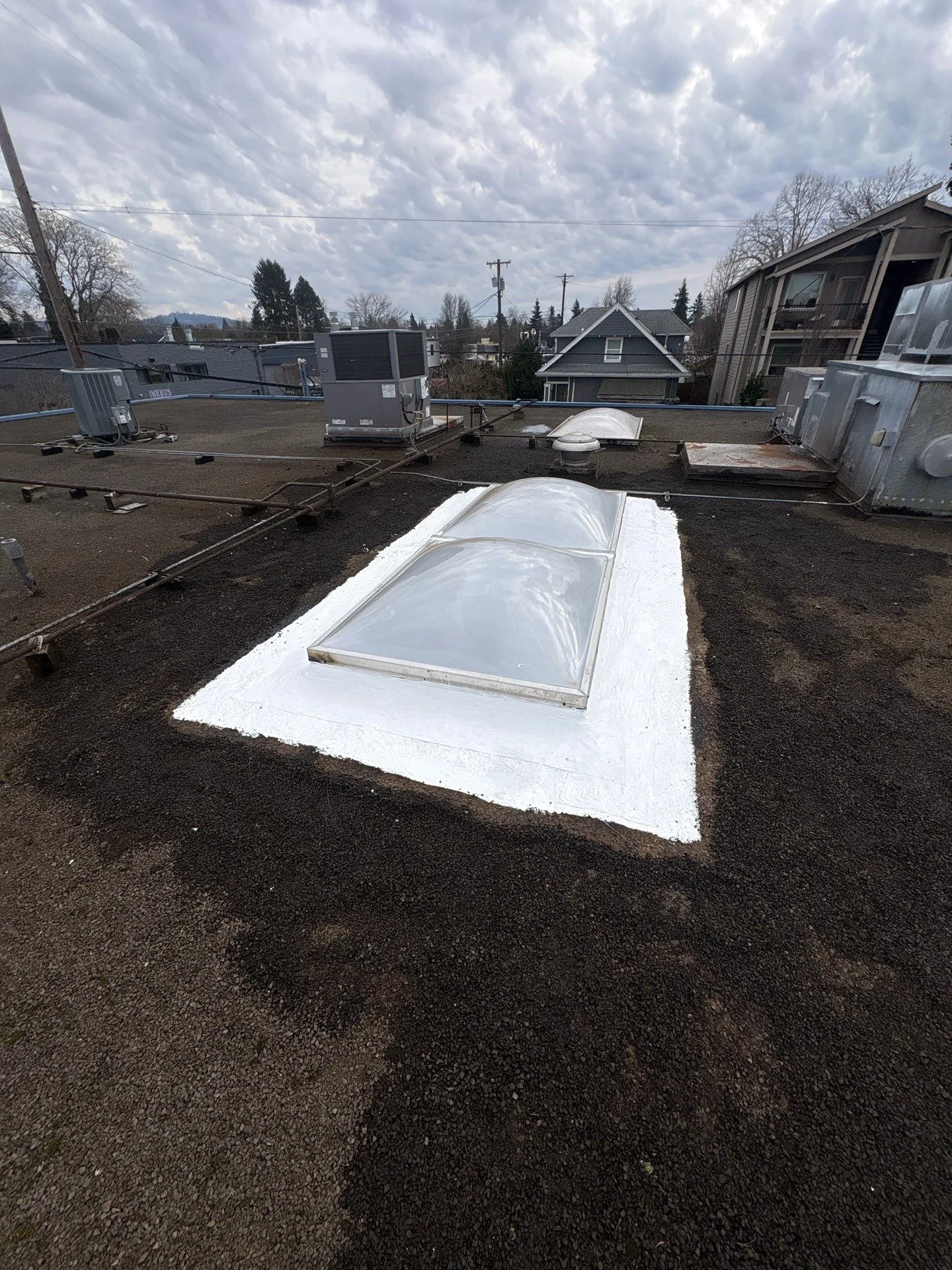
A complete repair process for aging roofs, failed installs, and active leaks.
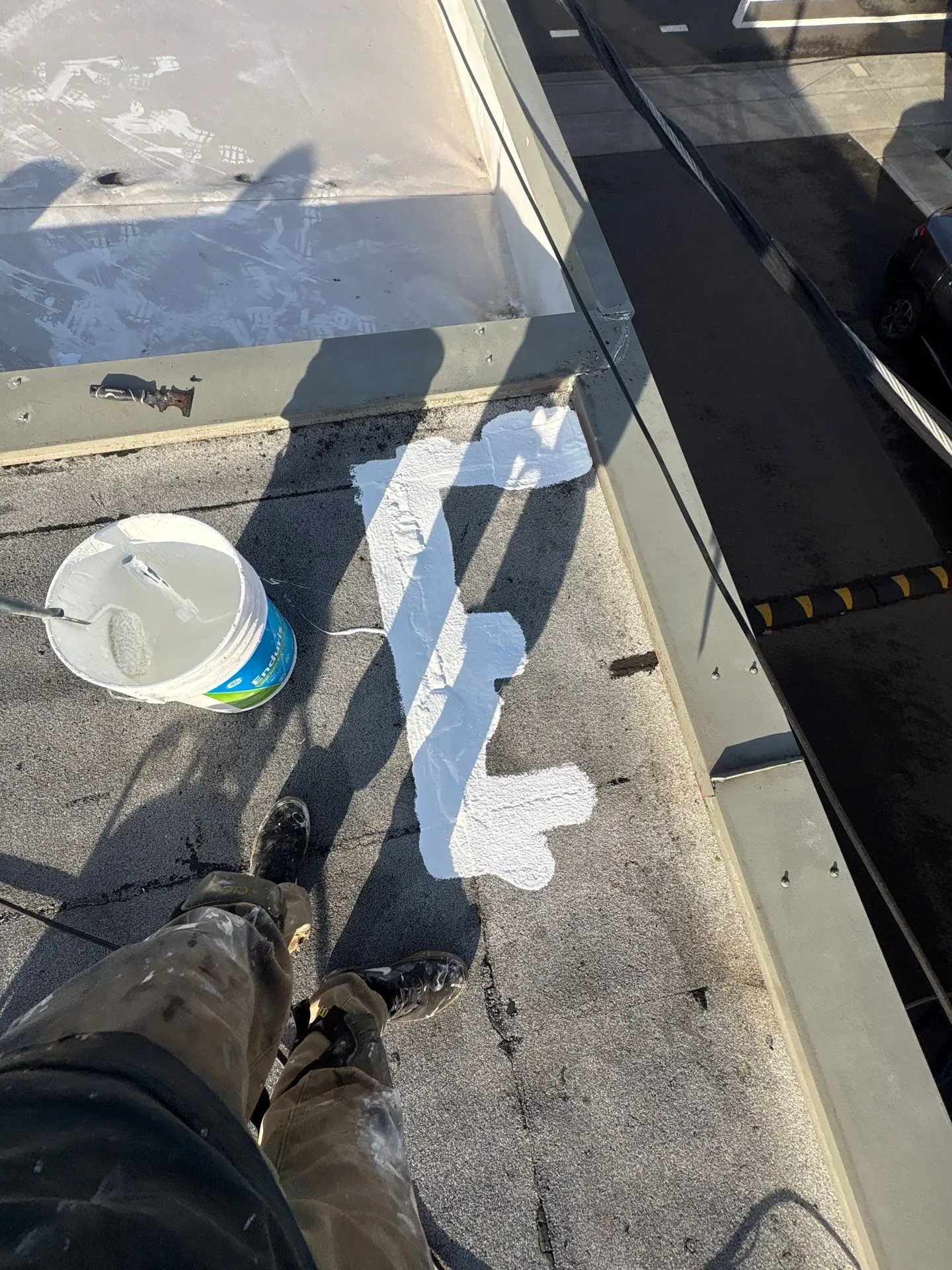
Repair
A leak is almost always one fixable spot, not the whole roof. Find where water actually gets in, seal it at the source, and the roof you already have keeps doing its job.
Free inspection
Every repair starts with a free, no-obligation inspection. An inspector traces where water actually gets in, then tells you plainly what it takes to fix it.
A complete repair process for aging roofs, failed installs, and active leaks.
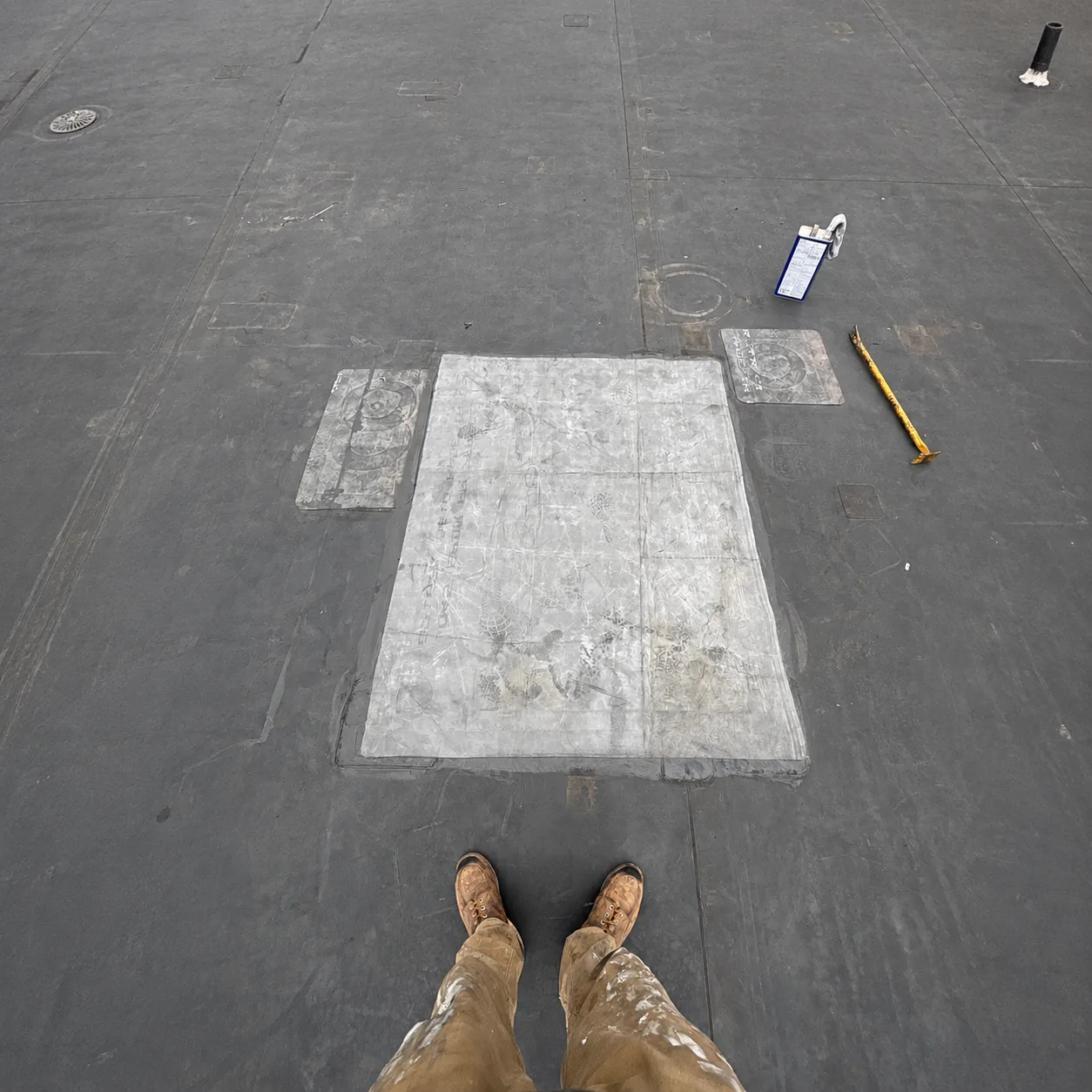
Proper materials. Fix the source. Built to last.
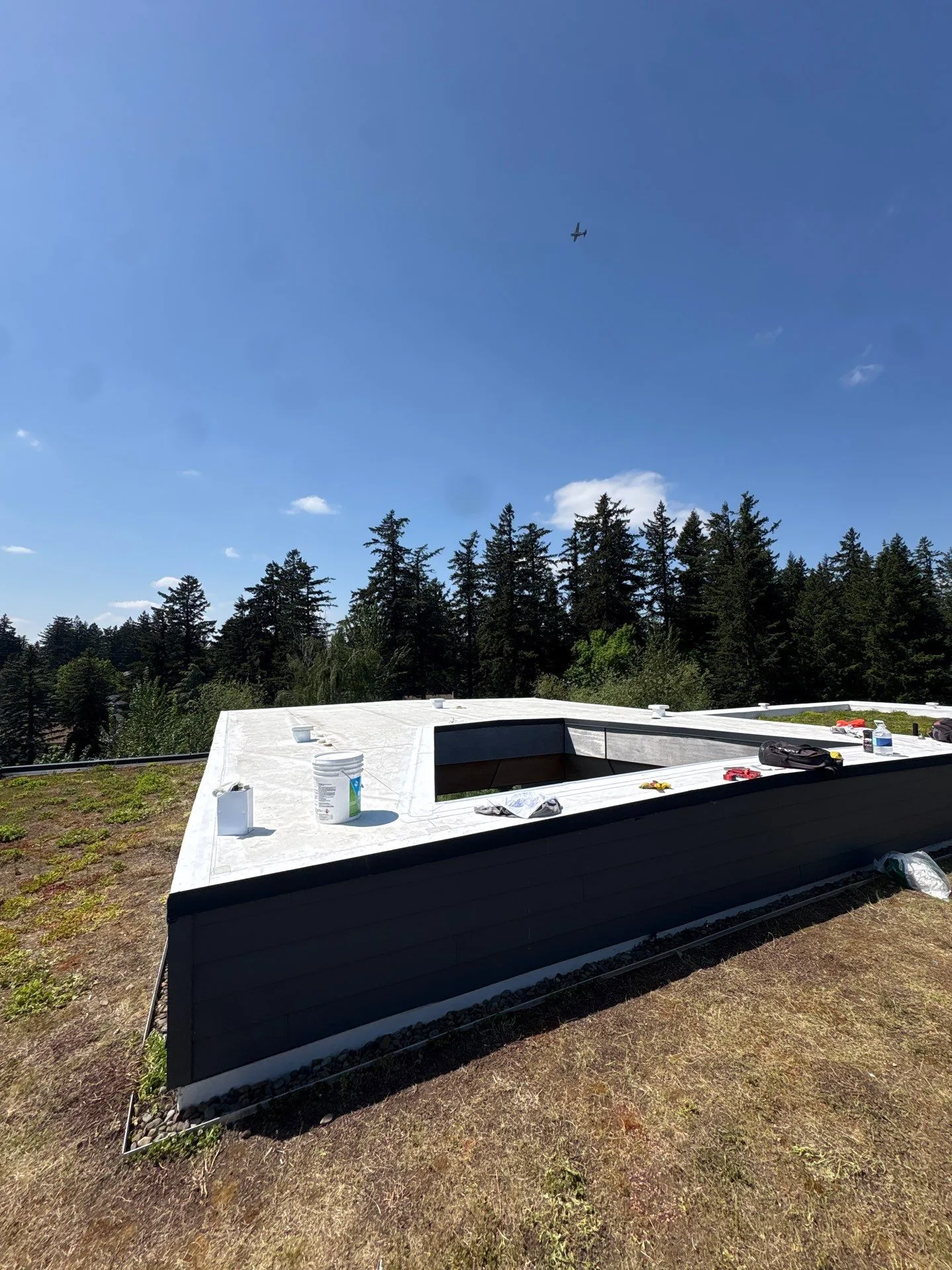
Repairs completed in 2–3 days so water stays out and damage stays limited.
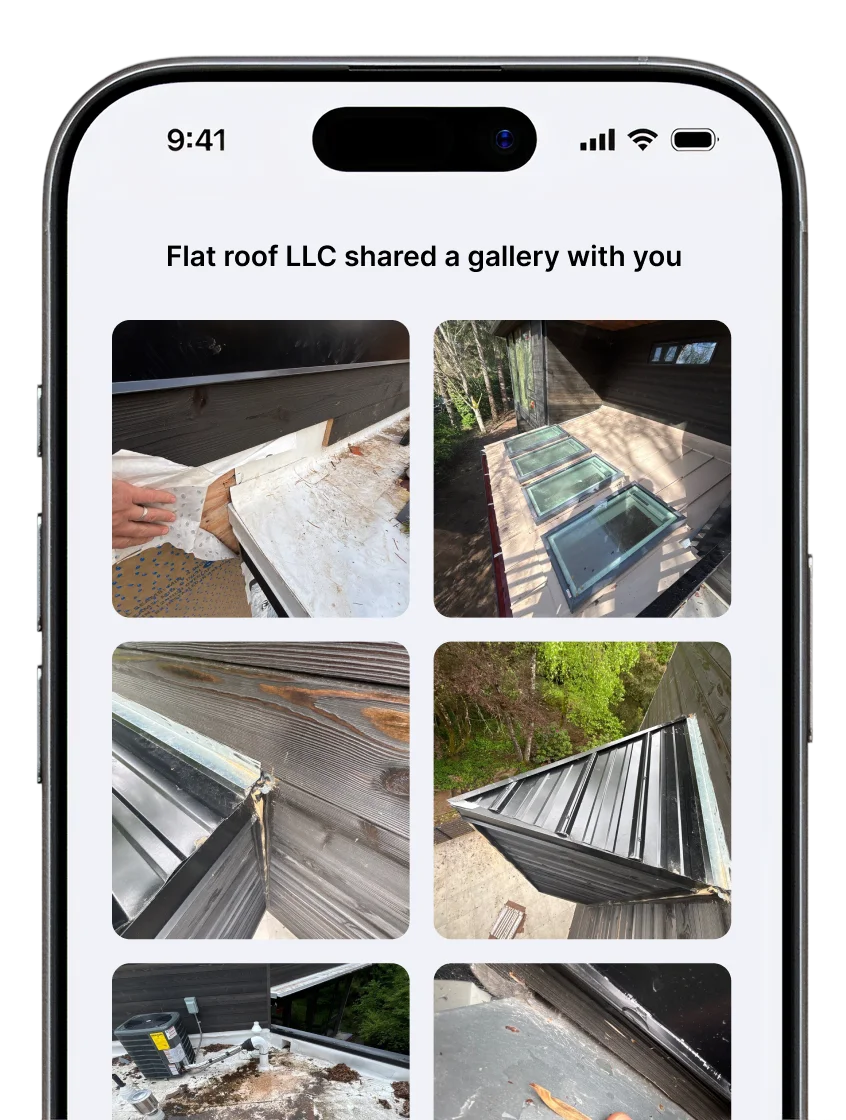
Shared project photos that keep everyone connected and every step documented.
Reach the full lifespan your roof was designed for by fixing the source of the problem.
Water goes for the same spots every time — the rooftop AC, the pipe, the drain, the corners and edges, the seam across the open roof. Every one of them sealed flush and shedding water again.
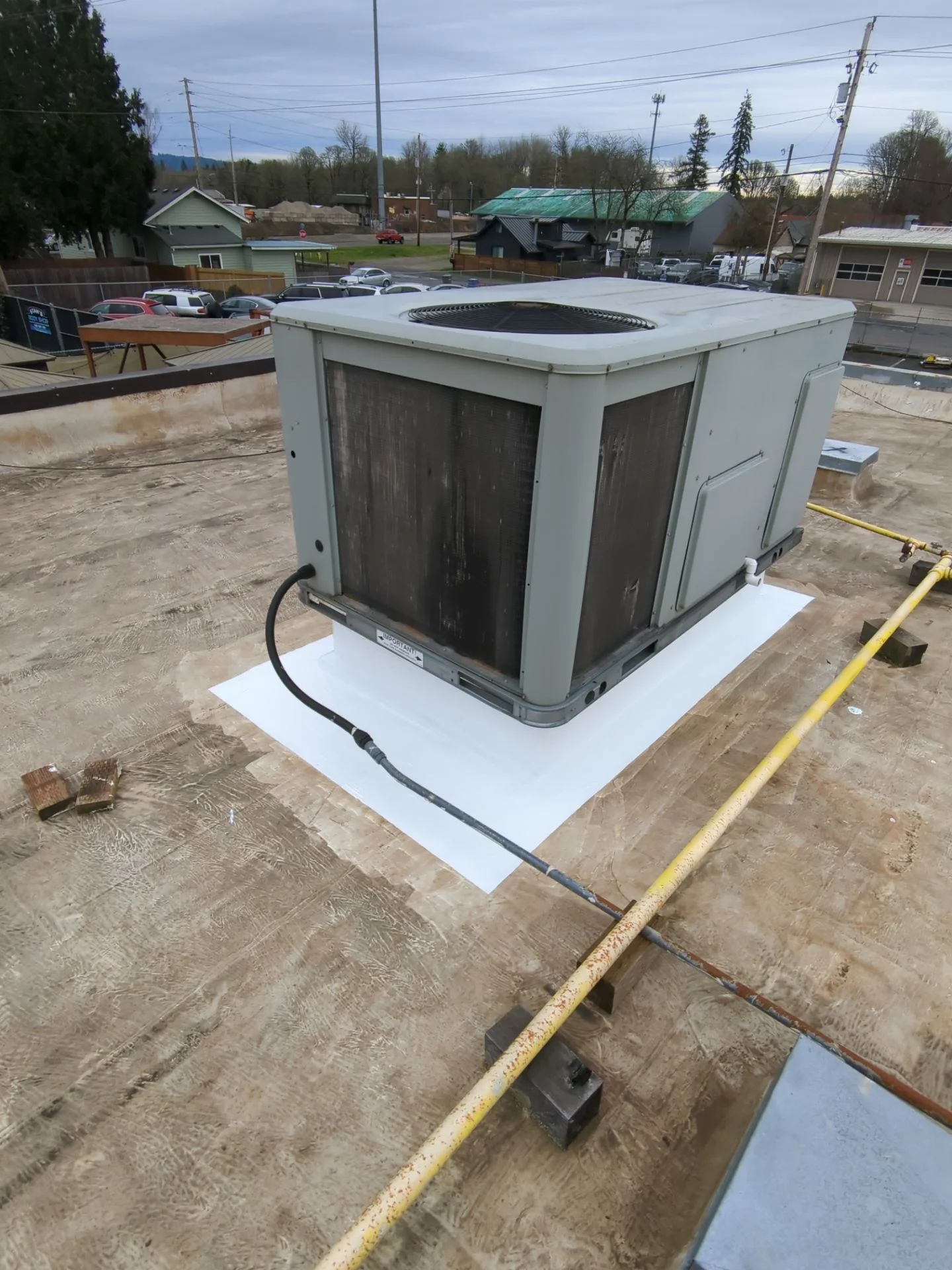
Around the rooftop AC unit. The silicone coating runs right up to the curb it sits on, so rain sheds off and past it.
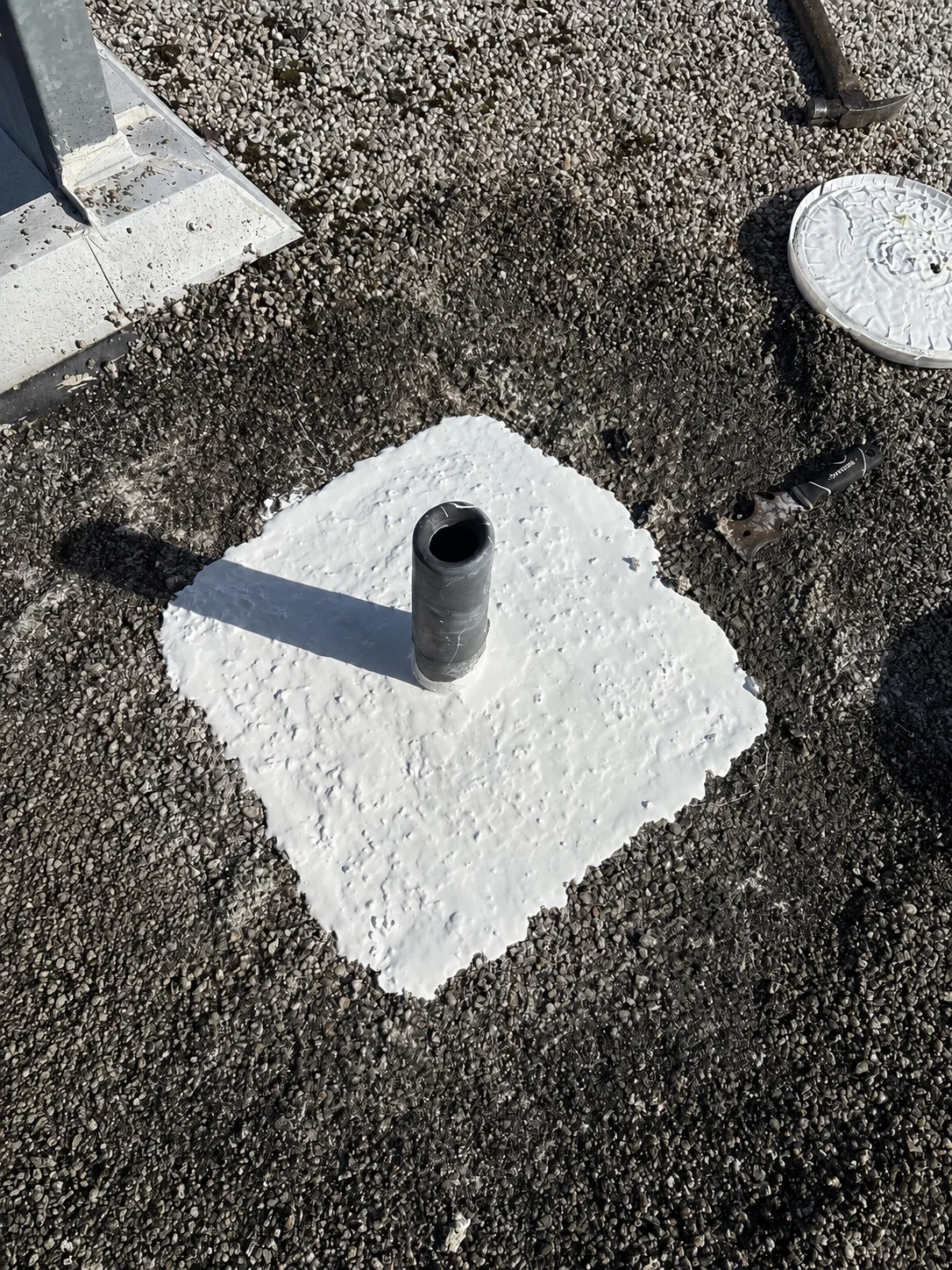
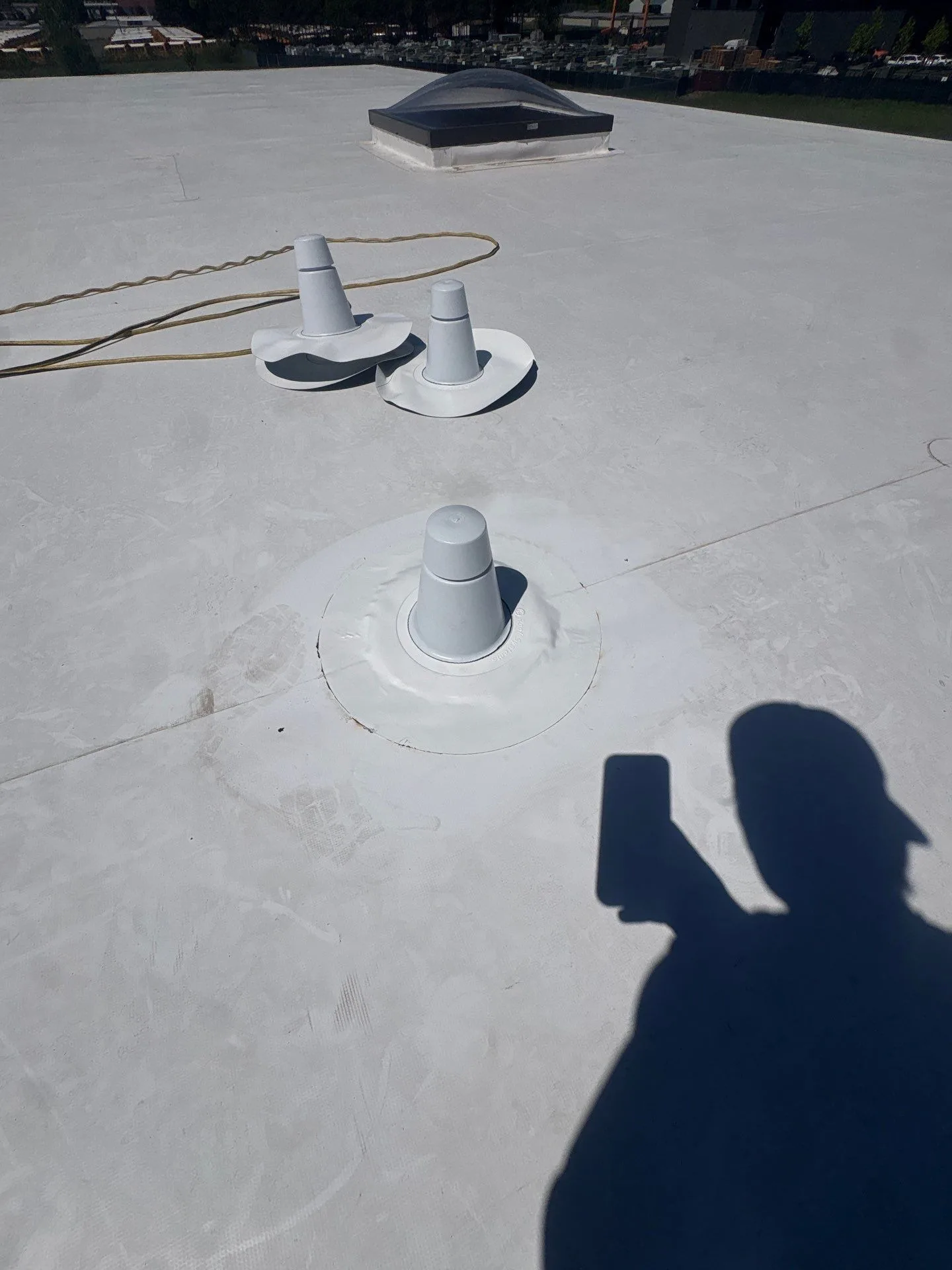
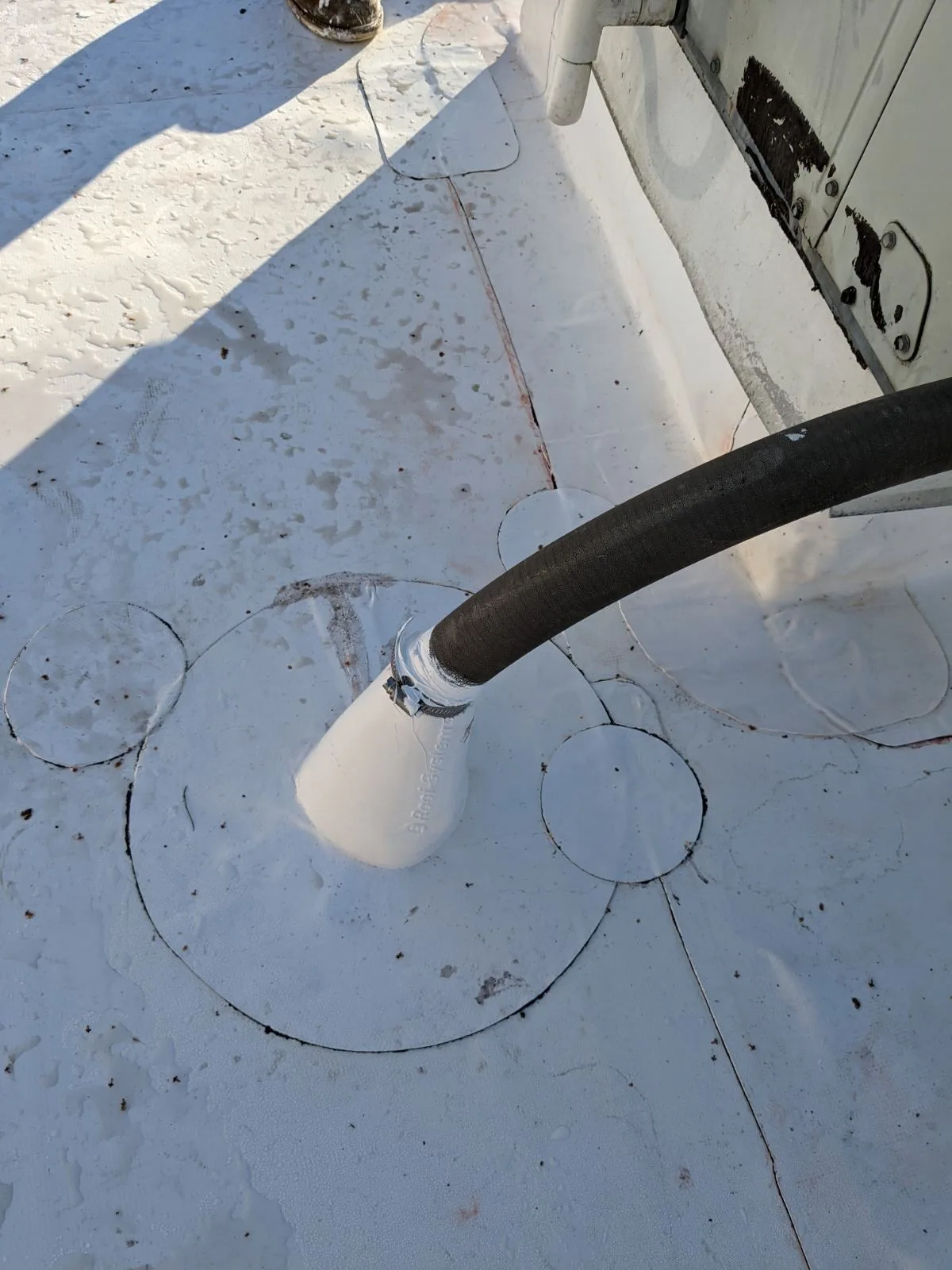
The pipe coming through the roof. Its collar is sealed flush into the surface, so water rolls straight over it.
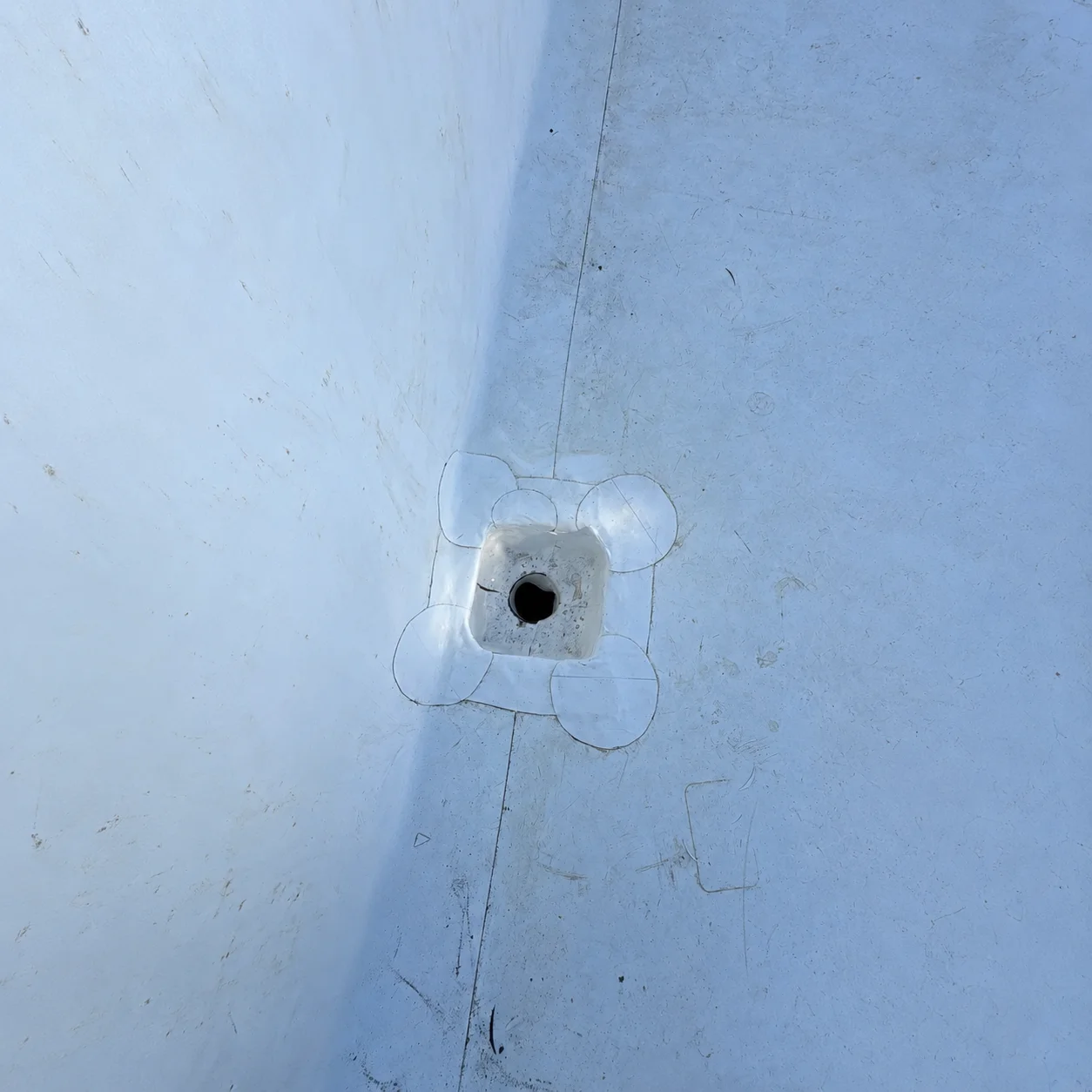
Down at the roof drain. The collar's wrapped tight all the way around, so water runs through it and off the roof.
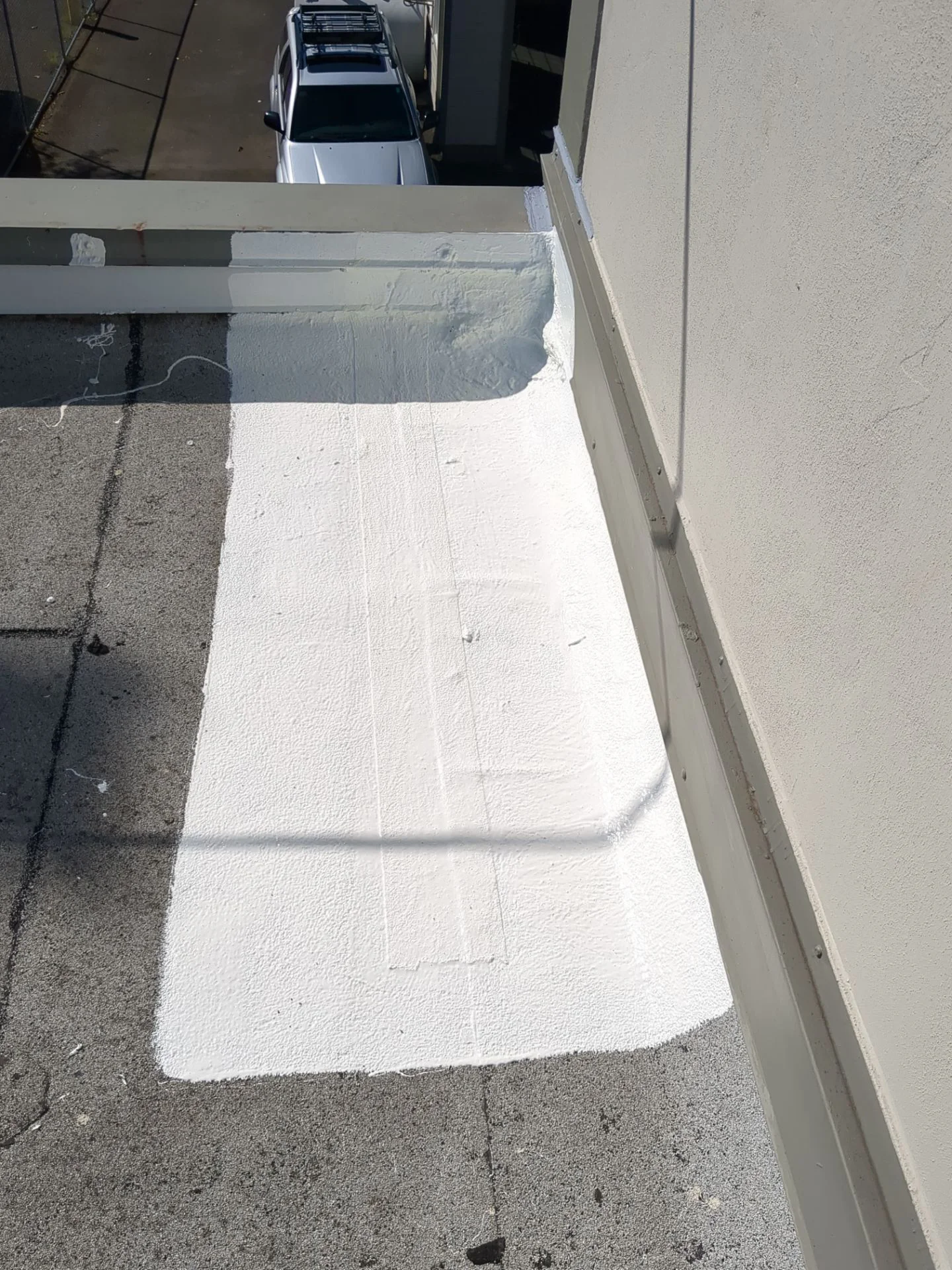
Where the roof meets the wall. The silicone coating carries up into the corner and seals it shut.
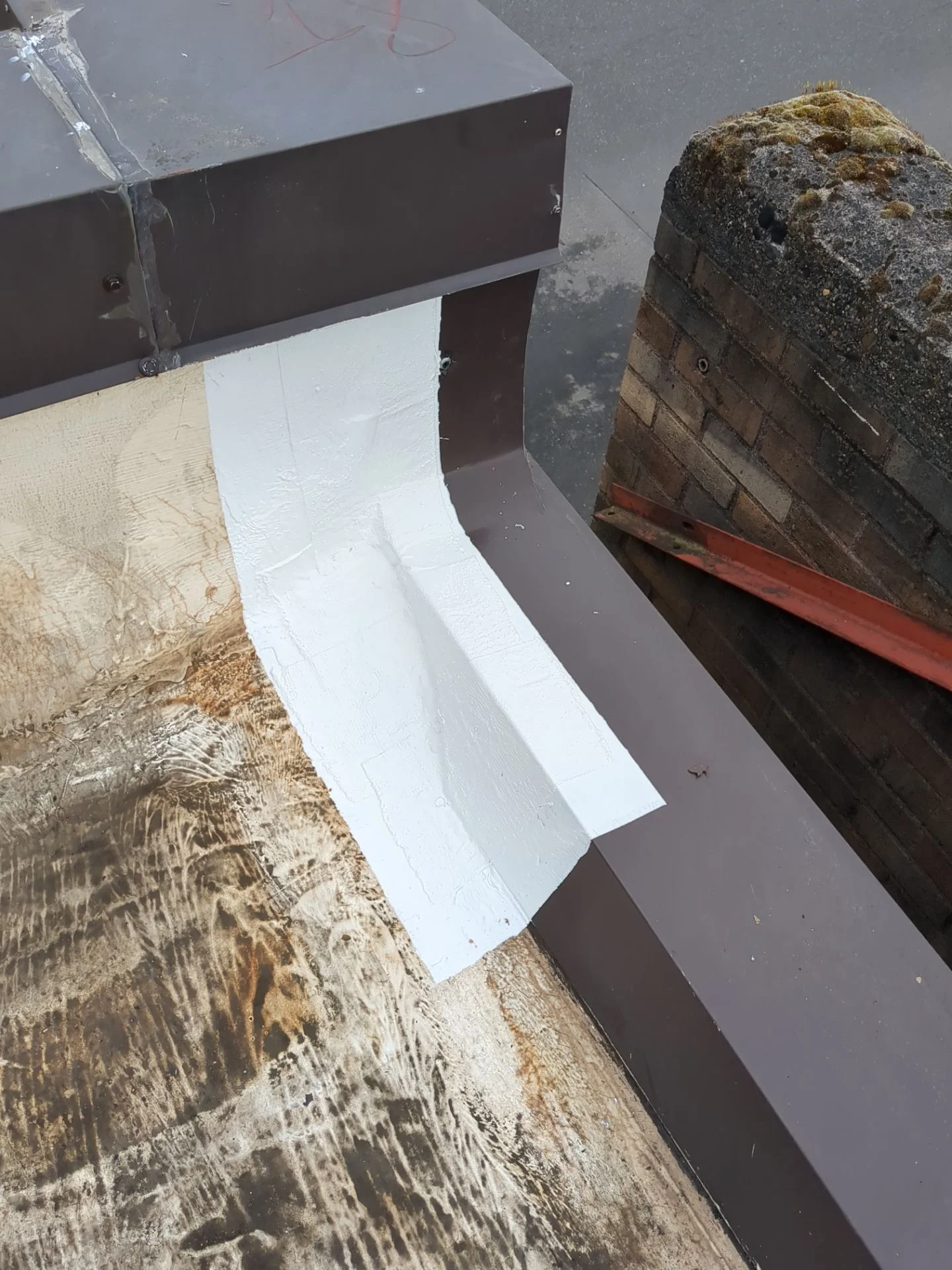
Out along the roof's edge. The seal laps over the top of the lip, so water sheds straight off the side.
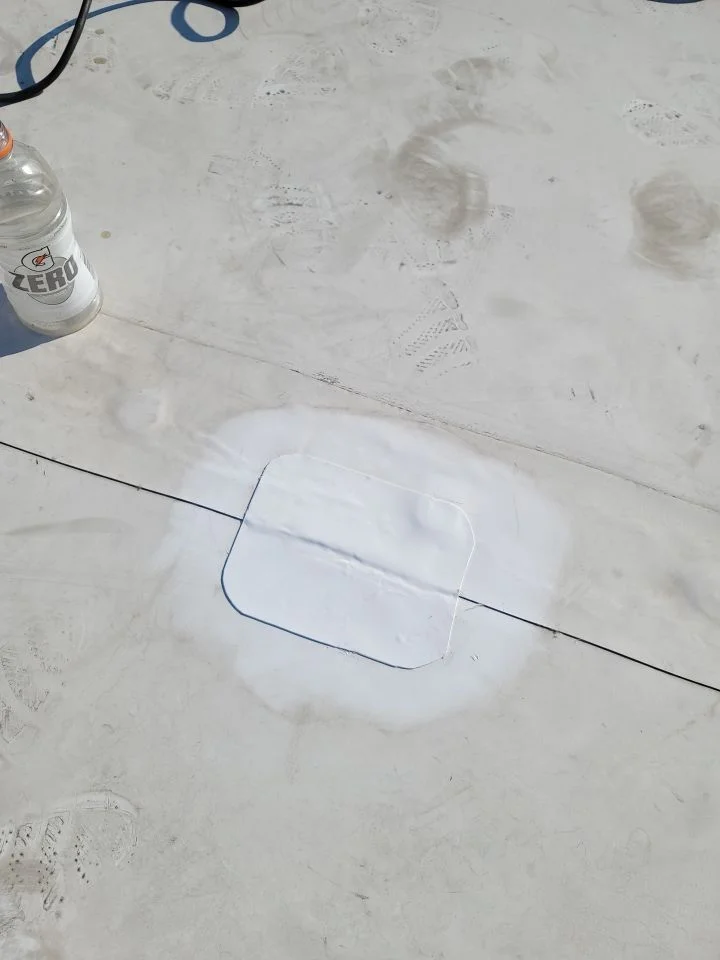
A seam across the open roof. Fresh membrane runs across the joint, leaving one unbroken surface.
Water gets at the spots you’d never expect — the wall beside it, the air underneath, the edge all the way around, the posts standing on it. Every one of them sealed up and shedding water again.
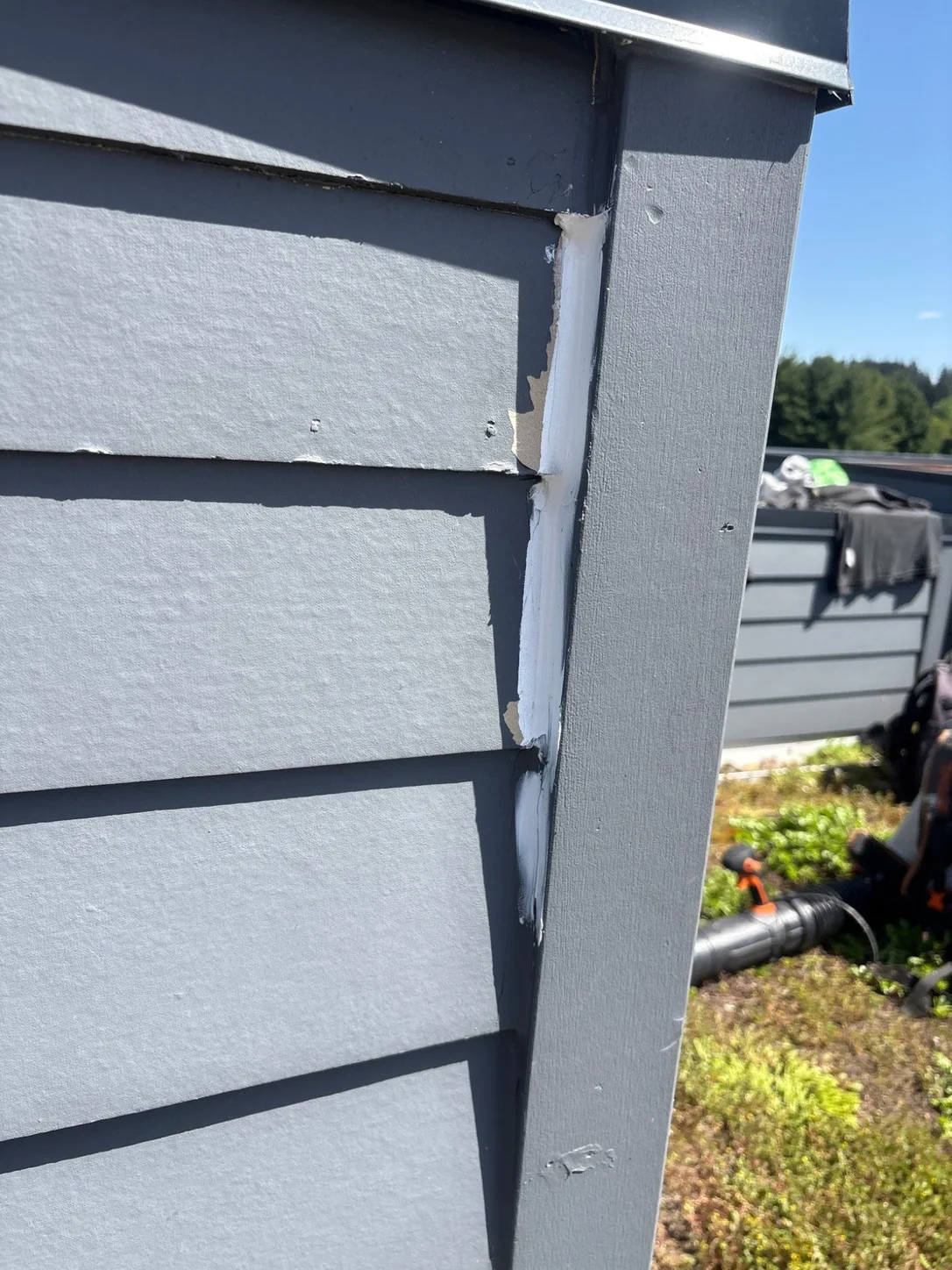
Gaps sealed tight. A spot on the wall, the edge of a window — every one found, cleaned out, and closed up.
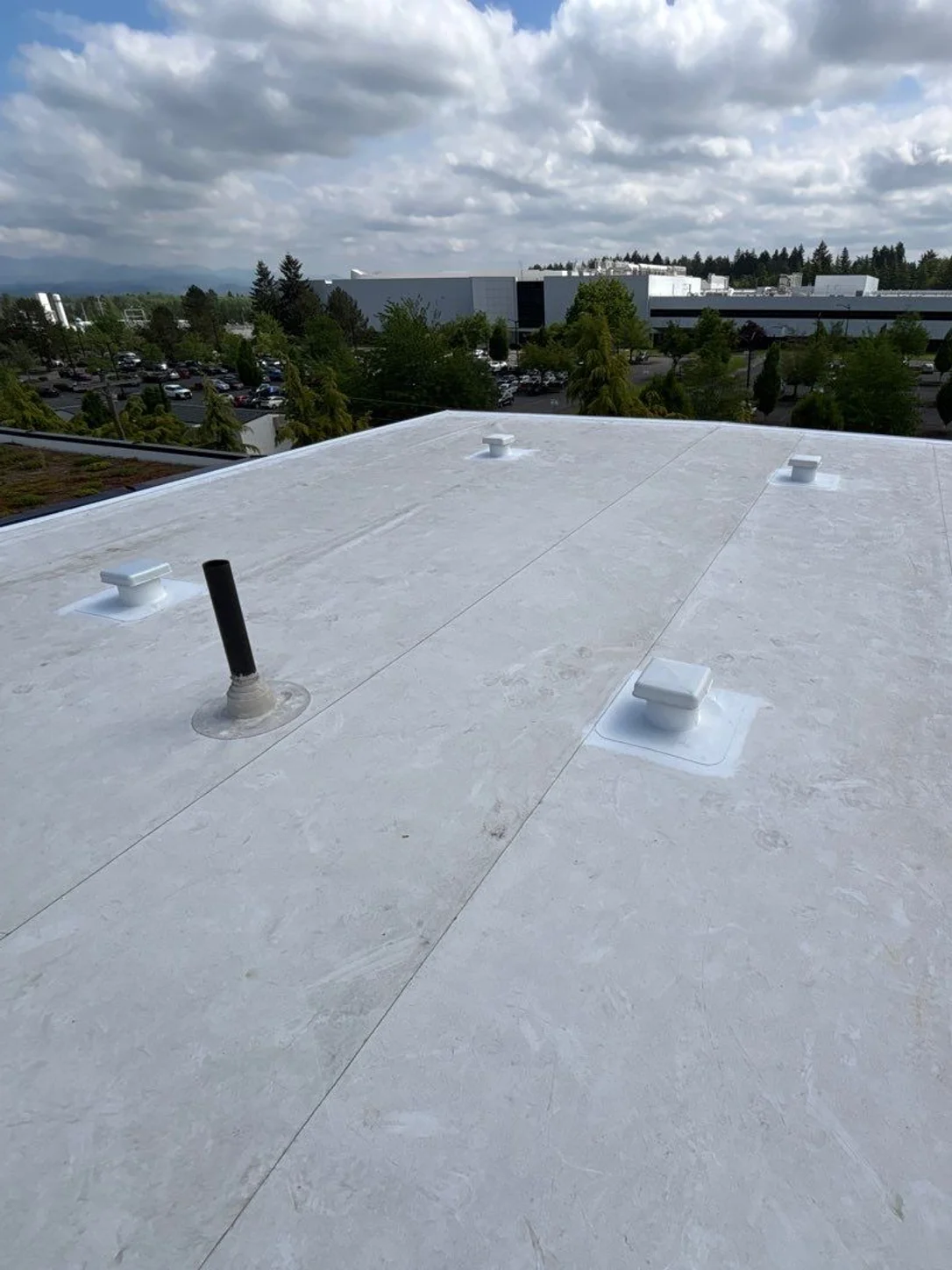
New vents added. Air moves through freely, and the space underneath stays dry.
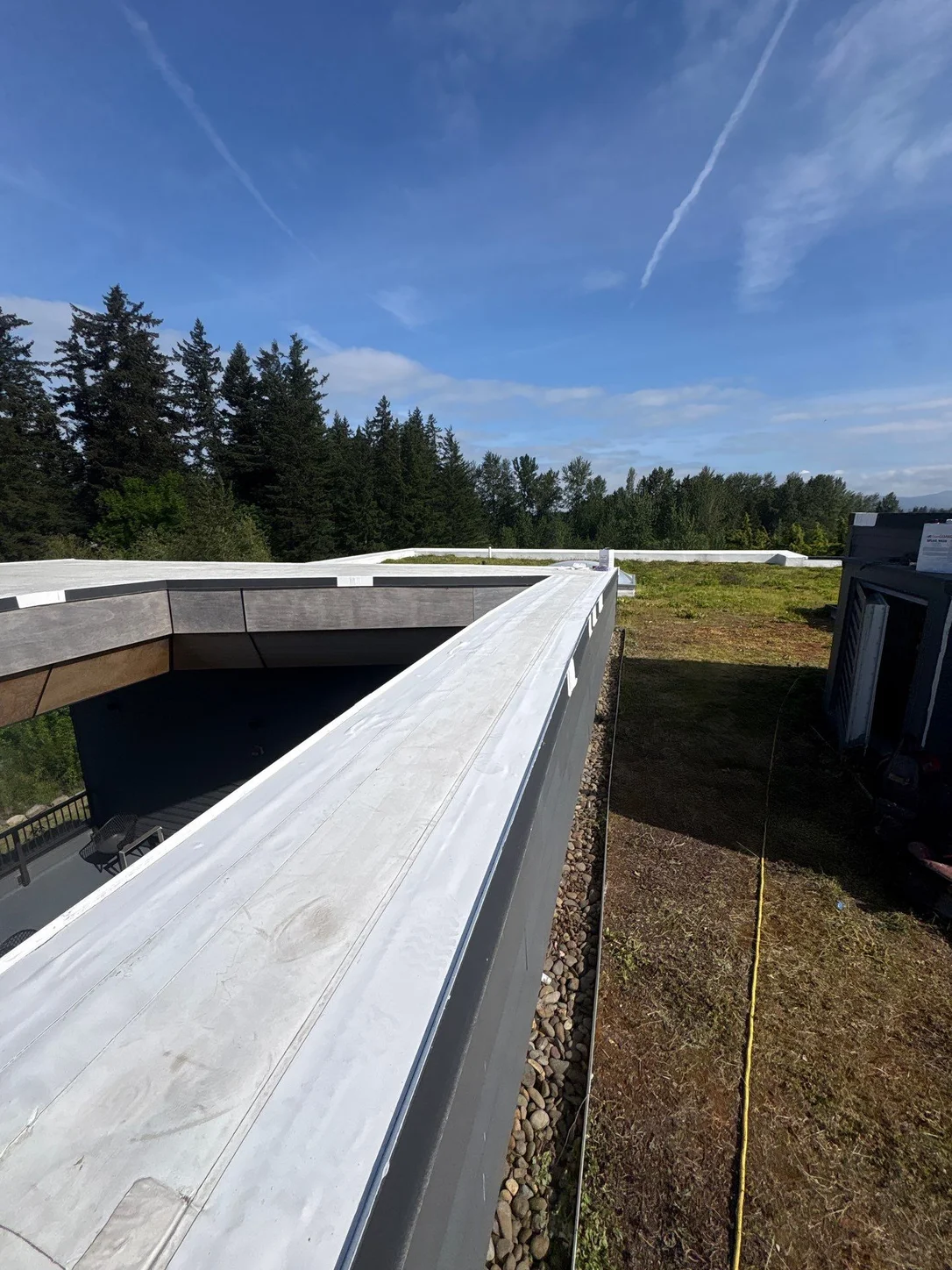
Perimeter rebuilt in metal. Clad metal runs the whole way around, welded into one piece edge to edge.
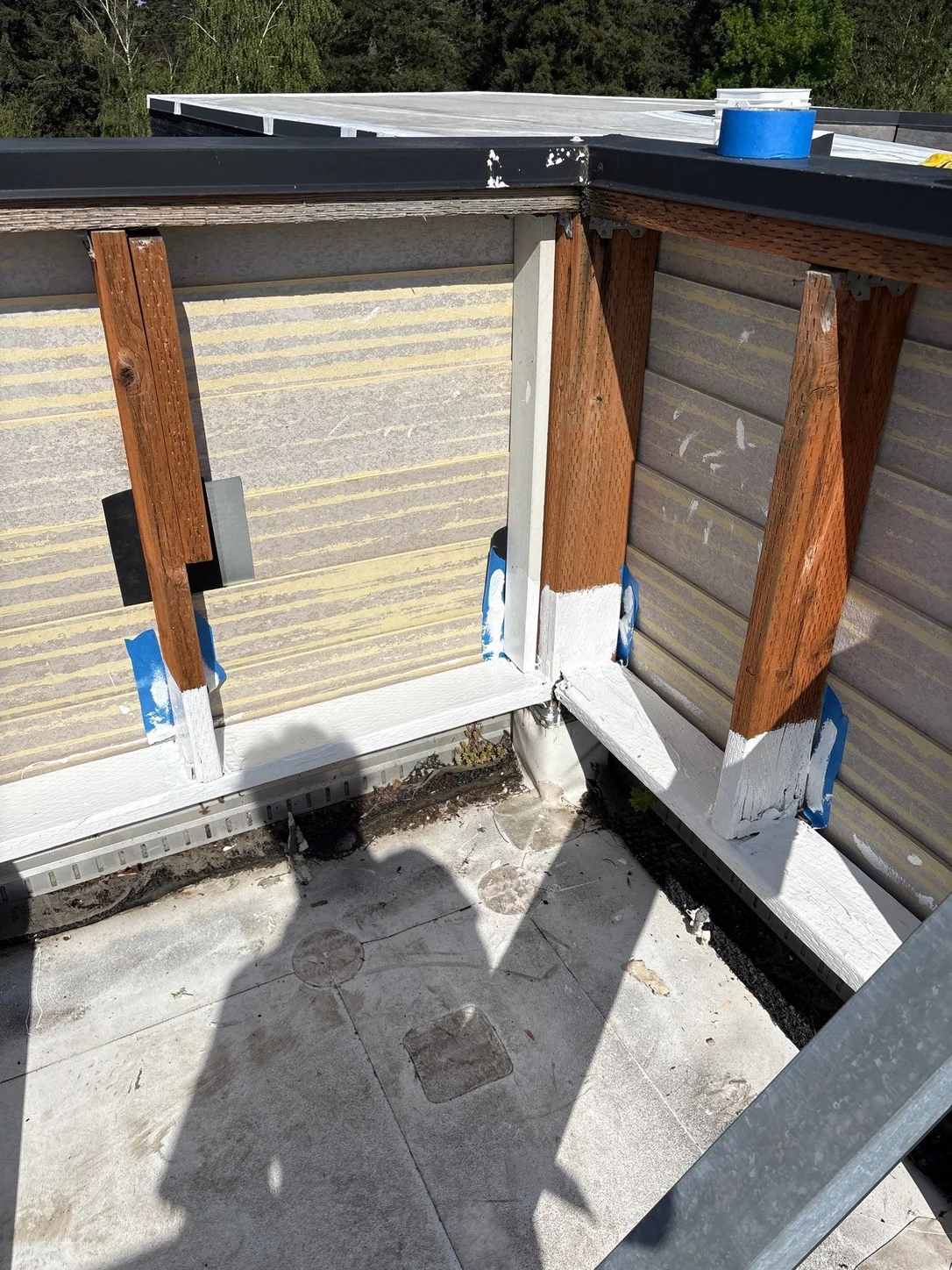
Coated in silicone. The odd, custom shapes a membrane can't cover get sealed waterproof.
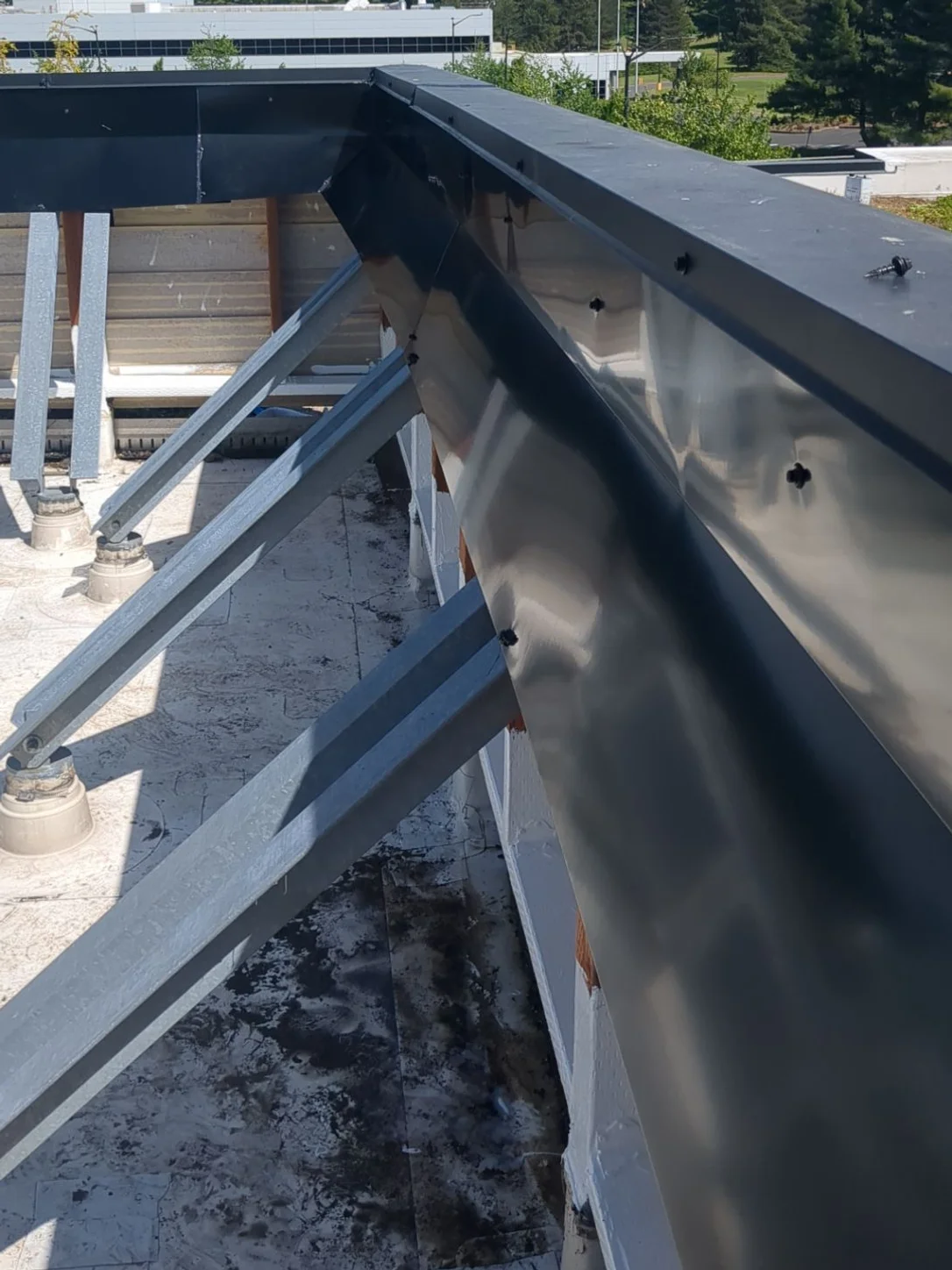
Proper Diversion A custom metal piece, angled to send the water the right way.
A repair only lasts when it becomes part of the roof. Fused into the membrane, matched to what the roof is made of, and rebuilt wherever it has gone bad underneath — so the fix holds as long as the roof around it.
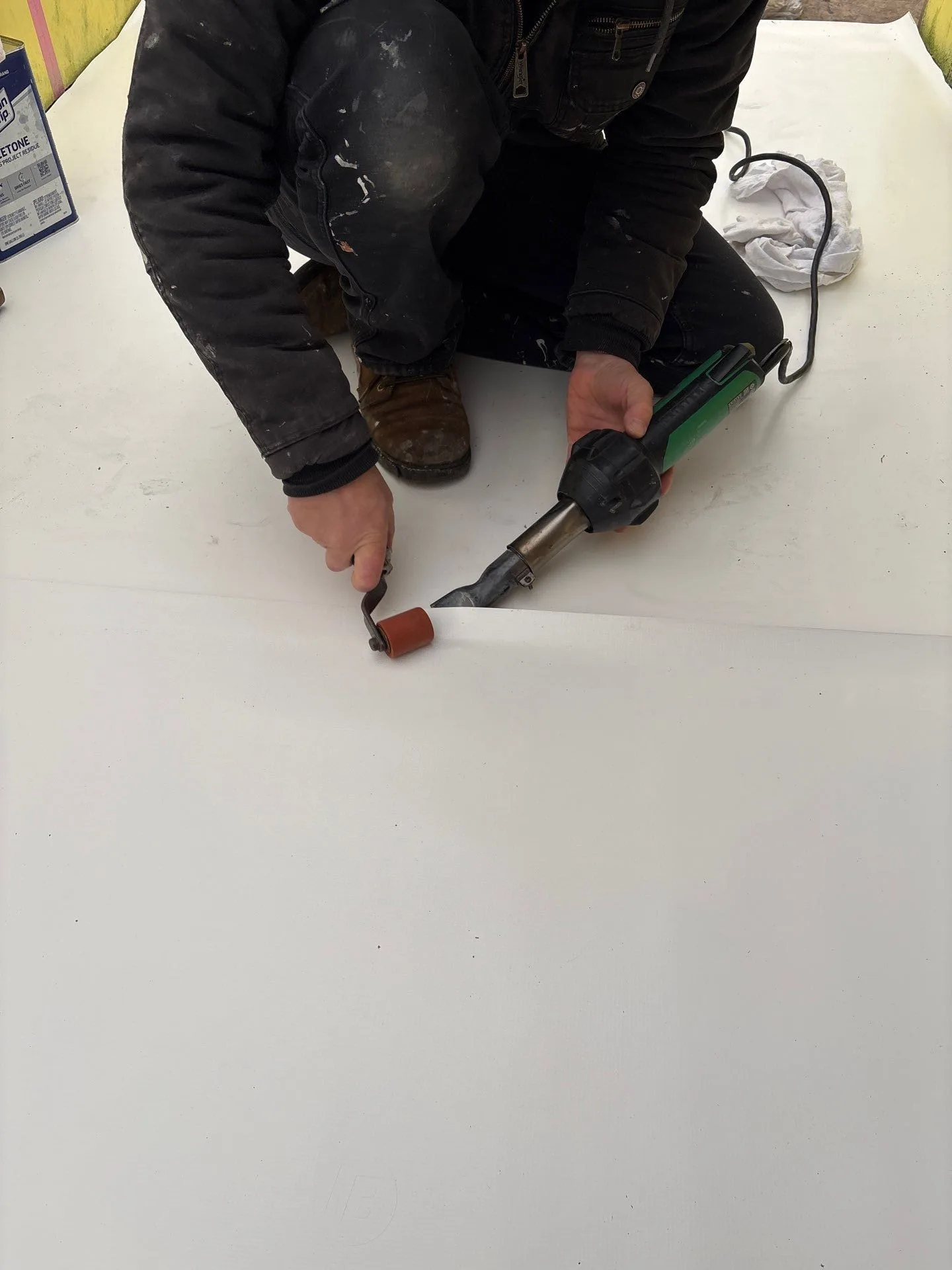
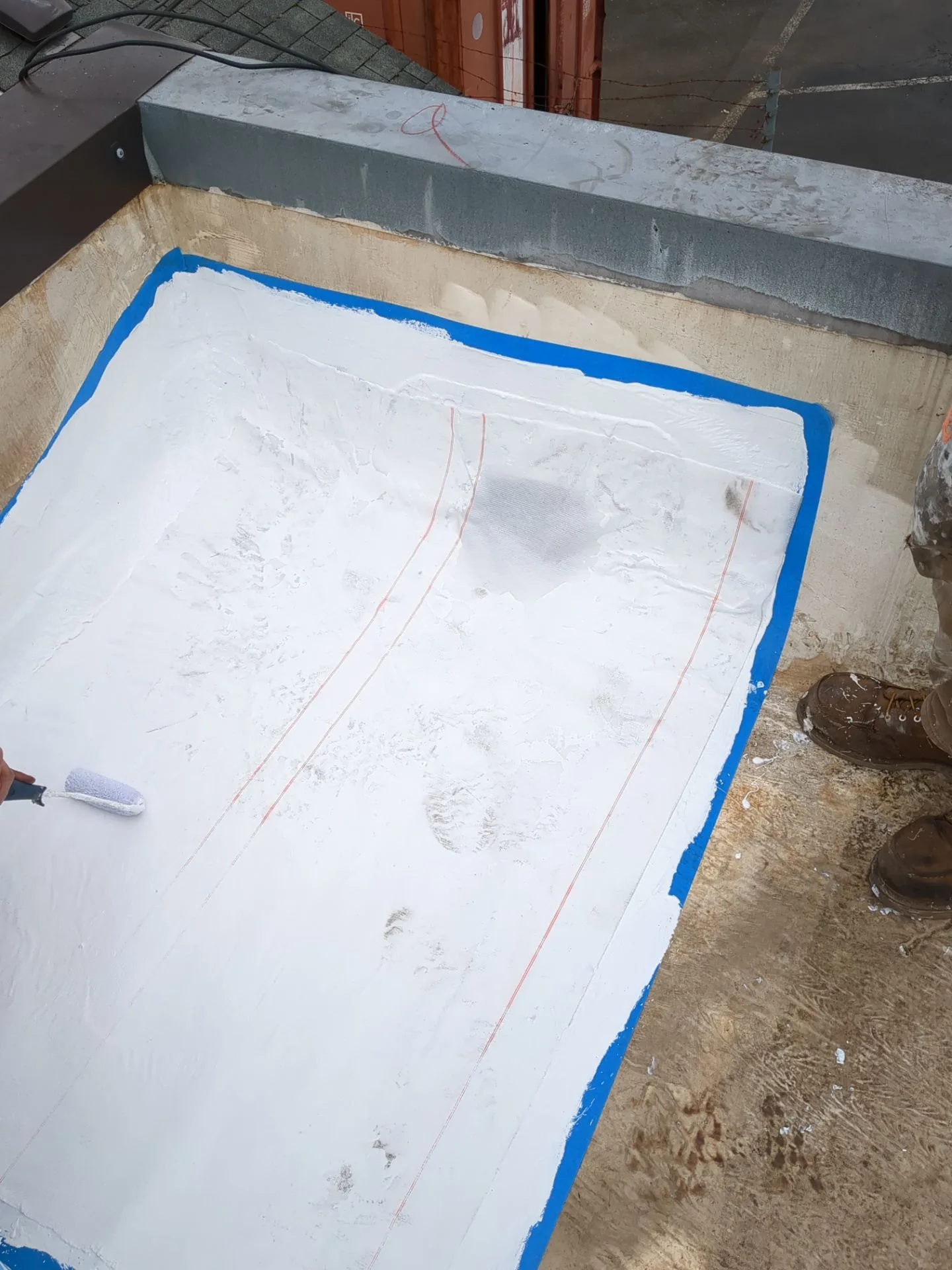
Heat runs along the seam until the new material softens and flows into the old, and the two cool as one continuous skin. The repair is melted into one surface with your membrane.
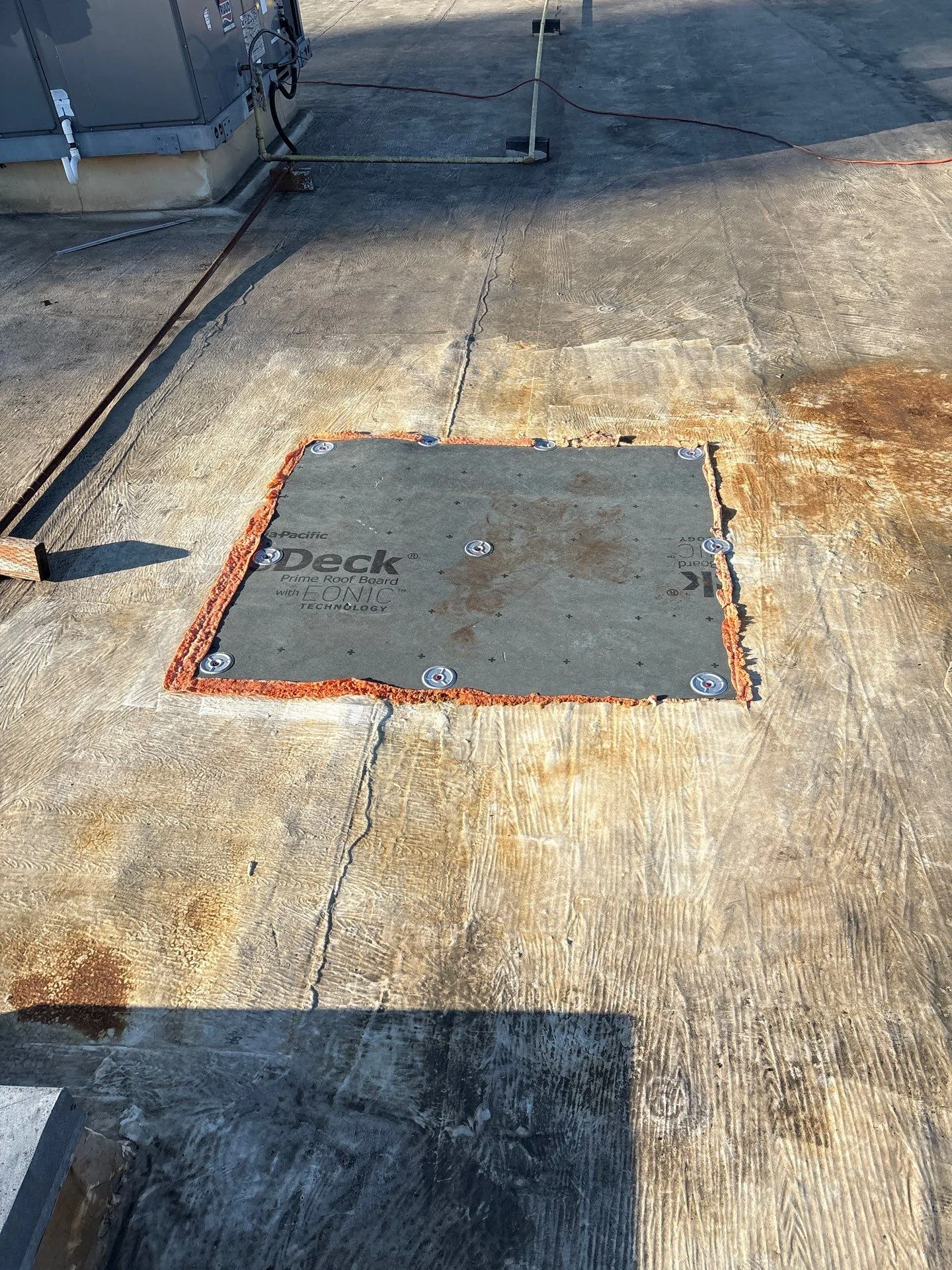
Where the wood underneath has gone soft, that whole section is opened up and rebuilt all the way down to the deck, then closed back over with a fresh surface.
The right boot is ordered for that exact part, sealed underneath, fitted over the top, and clamped tight with a metal collar. It ends up sealed in layers, around the part itself, so water rolls past and keeps moving off the roof.
A membrane roof gets the matching membrane; metal and older roofs take a silicone made to bond to them — sealed with what your roof is made of, so the repair grips and lasts as long as the surface around it.
Your repair is made to stay dry from the day it’s finished. For a full year, if anything ever fails to meet that standard, it’s covered completely, at no cost to you.
More often than not, repaired. A flat roof rarely fails all at once — it fails at the seams, the penetrations, the edges. We find the spots actually letting water in, fix those, and leave the sound roof you already have in place. A full replacement is the answer only when the membrane is past saving, and we’ll tell you plainly when that’s the case.
It shouldn’t — because we trace the leak to the exact spot water is getting in before we touch it, rather than sealing over the stain and hoping. The fix is fused into the roof, so it holds as long as the surface around it. And if water ever finds its way back through that repair within the year, we come back and make it right at no cost.
Most repairs are done in two to three days. Once the crew is on the roof, the bulk of the work is a day or two; a single seam can be quicker. Your specialist gives you the timeline before anyone starts, so you know what to expect.
Sometimes the wood under the membrane has gone soft, and there’s no way to know until it’s opened up. If that happens, we stop, show you photos of what’s there, and walk you through what it takes to rebuild it down to the deck. Nothing gets done, and nothing gets added to the bill, without your say-so first.
Yes. Every repair is covered for a full year. If anything we fixed fails to stay dry in that time, we come back and set it right, at no cost to you. The work is made to last far longer than that — the warranty is just there in writing.
It depends on what’s wrong and how much of it there is — a single seam is a different job from a perimeter rebuilt all the way around. Either way, a repair runs a fraction of what a full replacement costs, and you get the price before any work begins. No surprises.
No. The work happens on the roof. Your specialist coordinates access ahead of time, the crew does the repair, and every step is photographed — so you can see exactly what was done up there whenever you get a chance to look.
Usually within the same week. If water is coming in right now, tell your specialist — we keep room in the schedule for repairs that can’t wait, and same-week and next-day starts are common.
